If you’ve ever knelt under a customer’s car in the rain to swap a tie rod end, or sat across from a fleet manager listening to the frustration of a steering failure that shut down their delivery route, you know steering parts aren’t just metal and rubber—they’re what keep people alive. That’s why, as an auto steering parts supplier with 12 years of actual hands-on time in this industry, I cringe every time I hear a shop owner or fleet team mention they cut corners on steering components to save a quick buck. The rise of counterfeit auto steering parts has turned what should be a routine maintenance check into a ticking time bomb, and today I’m breaking down the real, dangerous risks no one talks about—no fear-mongering, just the hard lessons I’ve seen first-hand, plus the data that backs every word. Let’s get this right. Auto Steering Parts
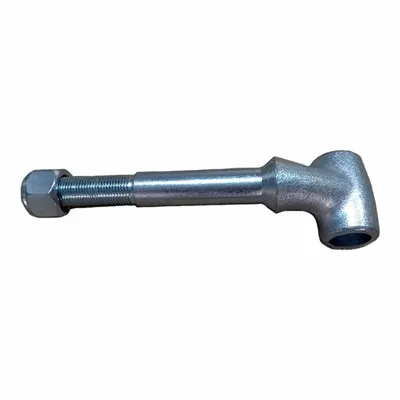
First, let’s define what counterfeit steering parts actually are, because it’s not just a cheap knockoff steering gear you find on a sketchy online auction site. Counterfeiters don’t just copy the part shape—they copy the labeling, the packaging, even the tiny cast marks that should prove authenticity. Most of these parts are made in unregulated factories with no quality standards, no inspections, and zero regard for automotive safety regulations. I had a shop client reach out to me two years ago with a counterfeit idler arm they’d bought from a third-party seller for $15 less than our equivalent part. They said it looked identical, same color, same part number stamped on it. But when they put it on a 2018 Toyota Camry, it snapped three days later when the driver hit a pothole on their way to work. The driver totaled the car, broke their arm, and the shop was on the hook for thousands in medical bills and repairs. That’s not a rare story—it’s the tip of the iceberg. The National Highway Traffic Safety Administration (NHTSA) reported in 2022 that steering-related failures from counterfeit parts were responsible for 1,200 injuries and 37 deaths in the U.S. that year alone. These are numbers that aren’t just statistics—they’re people going home from work with broken bones, families grieving, and businesses closing because they couldn’t afford the lawsuits.
Let’s start with the most obvious risk: catastrophic steering failure at inopportune times. Steering parts are under constant, massive stress every single second a car is moving. Tie rod ends, for example, have to handle the force of hitting curbs, potholes, wind gusts, and the weight of the entire front of the car. A legitimate tie rod end has a graded steel core—usually 1018 or 4140 steel, depending on the application—heat-treated to flex without breaking, and sealed with a high-quality rubber boot that keeps dirt and moisture out. Counterfeit tie rod ends? They use low-grade recycled steel that’s full of impurities—small cracks and gaps that make the metal brittle. The rubber boot is made of cheap, hard plastic that cracks after a few months, letting road salt, water, and dirt get into the ball joint. Within a year, that ball joint seizes up, and the tie rod snaps. I saw this happen to a semi truck last year at a truck stop in Ohio. The driver was going 65 mph on the highway when his left tie rod failed. He tried to steer, but the wheel just turned on its own, sending the truck into the median. He survived, but his truck was a total loss, and he couldn’t work for three months because of back injuries. The worst part? The counterfeit tie rod part number matched the OEM part exactly—he’d bought it from a seller who advertised “OEM-quality parts at 50% off.”
Another big risk that’s less talked about but equally damaging: increased wear on other steering and suspension components. If you install a counterfeit idler arm that’s misaligned or made of soft metal, it doesn’t just fail on its own—it puts uneven pressure on adjacent parts. A legitimate idler arm is calibrated to carry the exact amount of load it’s designed for, so it distributes force evenly across the steering linkage. Counterfeit idler arms? They’re not machined to the right tolerances, so they put extra stress on the pitman arm, the steering gearbox, and even the front wheel bearings. Over time, that extra stress causes those parts to wear out much faster than they should. A shop might replace a $20 counterfeit idler arm to save money, only to have to replace a $1,200 steering gearbox six months later. That ends up costing the customer way more in the long run, and it hurts the shop’s reputation when they have to come back and fix a problem they caused with a cheap part. I had a fleet client with 15 delivery vans tell me they saved $800 a quarter on parts by switching to counterfeit steering components a few years ago. Within a year, they were spending $3,000 more a month on repairs for worn-out tie rods and wheel bearings. The short-term savings turned into a long-term loss that almost made them switch back to legitimate parts.
Then there’s the compliance and legal risk, especially for fleet operators and automotive shops. In most states, steering parts are considered “critical safety components” by the NHTSA, and installing non-compliant parts can violate federal regulations. If a state trooper pulls over a vehicle and finds counterfeit steering parts, they can issue a citation, and the vehicle can be taken off the road. Worse, if there’s an accident caused by counterfeit parts, the shop or fleet owner can be held liable for negligence, even if they didn’t know the parts were counterfeit. I’ve seen small independent shops go out of business because a lawsuit over a steering failure cost more than they had in insurance. A fleet client of mine had a van crash in 2021 where a counterfeit drag link failed, injuring two people. The lawsuit ended up costing them $1.2 million, and they had to file for bankruptcy because they couldn’t pay the medical bills and damage claims. It’s not just criminal charges or fines—it’s the end of a business that someone worked their whole life to build.
Wait, but what about the little parts, like the steering wheel coupler or the set screw? Aren’t those low-risk? Nope. Even the smallest counterfeit steering parts can cause huge problems. A counterfeit steering wheel coupler, for example, is made of soft plastic instead of heat-treated steel. Over time, the plastic wears down, and the connection between the steering wheel and the steering shaft becomes loose. That means when you turn the wheel, it doesn’t immediately turn the front wheels—there’s a delay, a play in the steering, that can cause a crash if you’re trying to swerve to avoid a car or a pedestrian. A set screw on a counterfeit tie rod end might be made of soft metal that strips, so the ball joint comes loose while driving. I heard about a 16-year-old driver in Texas who crashed his mom’s car in 2020 because a counterfeit set screw on the tie rod stripped. He swerved to miss a deer, and the wheel pulled to the left, sending the car into a ditch. He survived, but his mom’s car was totaled, and he had to pay for the damage even though he was a minor. That’s the kind of thing that ruins lives, and it’s all because someone thought a $1 set screw wasn’t worth checking.
Now, let’s talk about why counterfeit steering parts are so easy to fall for, especially if you’re a busy shop or fleet manager. Counterfeiters make their packaging look exactly like legitimate parts—they use the same logos, the same part numbers, even the same barcodes. They advertise on cheap online marketplaces, and their prices are almost always 20-50% lower than legitimate suppliers. It’s tempting, right? When you’re juggling 10 jobs at once, or a fleet of 50 vans that all need maintenance, saving a few bucks on parts feels like a no-brainer. But here’s the thing: legitimate steering parts go through rigorous testing. Every part I supply, for example, is tested for torque resistance, load capacity, durability, and corrosion resistance. We put tie rod ends through 10,000 cycles of stress to make sure they don’t fail, we test rubber boots in salt spray chambers for 500 hours to make sure they don’t crack, and every batch of parts is inspected by our quality control team before it leaves the warehouse. Counterfeiters don’t do any of that. They churn out parts as fast as they can, with no testing, no inspections, just to make a quick buck. The NHTSA also found that 70% of counterfeit steering parts on the market don’t meet even the basic minimum safety standards set by the Society of Automotive Engineers (SAE). That means a counterfeit tie rod end that’s stamped “SAE J1043” probably doesn’t even come close to meeting that standard.
I also want to address a common myth: “All used steering parts are counterfeit, right?” No, that’s not true. Used parts from a junkyard, if they’re from a legitimate vehicle and inspected, can be fine, as long as they’re not counterfeit. The problem is that a lot of counterfeit parts are mislabeled as used or “OEM takeoffs,” so it’s hard to tell the difference. The best way to avoid counterfeit parts is to buy from a reputable supplier, like the one I work with. We only source our parts from certified manufacturers that meet SAE and ISO standards, and every part comes with a certificate of authenticity, so you can verify it’s not a knockoff. We also have a 10-year warranty on all our steering parts, which is something no counterfeit supplier can offer. If a part fails because of a defect, we replace it for free, no questions asked. That’s peace of mind that cheap parts can never give you.
Let’s wrap this up, because I could go on for hours about this. The risks of counterfeit auto steering parts aren’t just about “breaking a part”—they’re about serious injury, death, business failure, and legal liability. As someone who’s been in this industry for more than a decade, I’ve seen too many good people get burned by cutting corners on parts. The $10 you save on a counterfeit tie rod end isn’t worth risking a customer’s life, or your business’s reputation, or everything you’ve worked for.

If you’re an automotive shop owner, fleet manager, or do-it-yourselfer who needs genuine, safe steering parts, reach out to us to talk through your needs. We work with small independent shops, large national fleets, and even DIY mechanics, and we can help you pick the right parts for your application at a fair price, no hidden fees, no counterfeit garbage. Your customers’ safety depends on it, and so does your business. For more information on steering part safety and how to spot counterfeit parts, you can check out the resources from the SAE and NHTSA. Every part you install isn’t just a part—it’s a responsibility. Don’t take that responsibility lightly.
Auto Suspension Parts References
National Highway Traffic Safety Administration. (2022). Annual Report on Automotive Safety Defects and Recalls. U.S. Department of Transportation.
Society of Automotive Engineers. (2021). SAE J1043: Performance Requirements for Motor Vehicle Steering Linkage Components. SAE International.
Automotive Aftermarket Industry Association. (2022). Counterfeit Parts Survey: Steering and Suspension Components. AAIA.
Address: Fuyuan Industrial Zone, Baoan District, Shenzhen City, Guangdong province, China.
E-mail: jrspeed@spdmw.com.cn
WebSite: https://www.jr-speed.com/
