What’s the Difference Between a Disc Plow and a Moldboard Plow? From Your Go-To Ag Implements Supplier Agricultural Implements
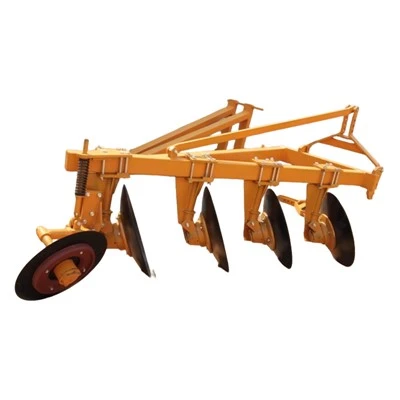
If you’re outfitting your farm for the spring tillage rush or updating your equipment lineup, you’ve probably stared at two rows of plows at your local co-op and wondered “which one actually does what?” Let’s cut through the jargon here—no stuffy agricultural textbooks, just the straight talk we dish out every day for folks running row crops, small family farms, and everything in between. I’m a second-gen guy in the ag implements game, so I’ve seen way too many growers pick the wrong plow and waste time, fuel, and even crop yields. Today, let’s break down the disc plow vs. moldboard plow like we’re chatting over coffee.
First, let’s start with the basics: both are tillage tools, right? So they’re made to turn over soil, bury crop residue, and get your seedbed ready for planting. But that’s where the similarities end. Let’s dive into how each is built, what they’re actually used for, and when you’d reach for one instead of the other.
Moldboard plows—sometimes called “turning plows” by old-timers—have been around for centuries, basically since someone figured out sticking a curved metal board behind a horse could flip dirt neatly. The core parts here are the shares (the sharp, pointed pieces that slice through the soil) and the big, curved moldboard that sticks up behind the share. When you pull the plow, the share cuts a slice of dirt, and the moldboard twists that slice 180 degrees, turning it completely upside down. That’s the key move here.
What does that upside-down turn do? Oh, it’s magic for burying stuff. If you had corn stalks, weed seeds, or even leftover fertilizer from last year growing, a moldboard plow will tuck that all 4 to 10 inches under the topsoil. No more weeds popping up with your new seeds—those annuals get buried so deep they can’t reach light. Also, if you’re dealing with crop diseases that hang out on residue (like fusarium or late blight), flipping the soil disrupts their life cycle, so they don’t mess with your next crop. For big grain farms or anyone rotating corn and soybeans, that’s a huge win.
But let’s be real—moldboard plows aren’t perfect. Their big downside is how hard they work. That curved moldboard creates a lot of drag, especially in heavy, sticky clay soil. I’ve seen guys get their tractors stuck mid-row because the moldboard plow was pulling way too much weight, and they didn’t size their tractor right. Also, in drier, sandy soil, the moldboard can leave a hard “plow pan” just below the tilled layer—like a compacted layer that roots can’t push through later on. And let’s talk about fuel: running a moldboard plow takes a lot more diesel than a disc plow, so if fuel prices are tight, that’s a big cost to factor in.
Now, disc plows. These are the newer kids on the block, but they’ve gotten super popular in the last 50 years or so. Instead of that big curved moldboard, they use a set of large, round, concave metal discs—usually 20 to 28 inches wide, sharpened on the edges. When you pull the disc plow, each disc cuts through the soil, rolls, and flips a smaller slice of dirt, at a shallower depth usually (6 to 8 inches, vs. the moldboard’s 4 to 10). No big drag, no twisting that full slice of dirt.
Wait, so what’s the upside of that? Disc plows are way more versatile, for one thing. They handle sticky clay way better than moldboards—those sharp discs slice through the mud instead of getting gummed up. They’re also lighter for their width, so you don’t need a super beefy tractor to pull them. That’s a huge deal for smaller farms or guys upgrading their tractors without dropping $100k on a new 200 HP model. But here’s the trade-off: disc plows don’t flip soil as thoroughly as moldboards. Because they just roll instead of twisting, some residue might sit near the surface, and weed seeds might not get buried deep enough to die. Oh, and in super rocky soil? Those sharp discs can chip or crack easier than a moldboard’s share—though most good disc plows use heat-treated steel these days to handle that.
Let’s make this concrete with real farm examples I’ve seen. Last year, a grower in central Illinois came to us because he’d been using a moldboard plow for his corn-soy rotation, but his fuel bills were through the roof, and his plow pan was stunting his soybean roots. We talked him into a disc plow paired with a light tiller for the top layer, and he cut his fuel use by 30% that season and his yields went up 7% because roots could grow deeper. On the flip side, a small family farm in Iowa that’s been organically growing heirloom tomatoes came in last month. They needed to bury all the tomato vines and weed seeds from their old beds to start new rows, and the disc plow’s shallow tillage didn’t bury enough. We pointed them to a light-duty moldboard plow, and they had no problem getting their beds prepped without overworking their 100 HP tractor.
Now, let’s talk about something that’s not just mechanics: soil health. That’s a huge topic right now, and plow choice directly ties into it. Moldboard plowing, with that full soil inversion, used to be the standard for good soil health—no weeds, no disease, neat rows. But more and more growers are moving away from full inversion tillage because it disrupts soil structure, kills earthworms, and releases carbon into the air. Disc plowing is a form of “reduced tillage,” so it leaves more crop residue on the surface, which helps hold moisture, prevent erosion, and feed soil organisms. That’s not to say disc plows are perfect for soil health—if you leave too much residue on top, you might get more slugs or diseases that live on the surface, depending on your crop. But it’s a middle ground for folks who want to cut back on tillage intensity without going full no-till.
We also get a lot of questions from guys who confuse disc plows with disc harrows. Let’s clear that up quick because it’s a common mix-up. A disc harrow is for breaking up clods after plowing, smoothing the seedbed, or tilling shallowly (2 to 4 inches) for cover crops. A disc plow is for primary tillage—turning over soil to prep for main crops, depth of 6 inches or more. Big difference. So don’t mix those up when you’re shopping.
What about cost? Let’s be real, that’s a big factor. A basic moldboard plow for a small tractor (under 100 HP) runs around $1,500 to $3,000, depending on how many shares you need. A mid-sized disc plow for 150 HP tractors is about $2,500 to $4,500. But don’t just look at upfront cost—remember fuel, maintenance, and how long the plow will last. Moldboard shares wear out faster in rocky soil because they’re pointed, while disc plow discs can last 5 to 7 years if you keep them sharpened. Also, if you’re planning to use your plow for more than just your main crop—maybe you till cover crops, prep pastures, or work in rocky areas—disc plows are way more flexible.
Wait, let’s not forget specialty cases. If you’re working in heavy, wet soil that never dries out in spring, moldboard plows can get stuck because they push too much wet dirt. Disc plows, with their rolling discs, slice through wet soil without as much suction, so you can work earlier in the season. If you’re farming in very dry, sandy soil, though, a moldboard plow might leave a better seedbed because it firms up the soil around the seed, helping with moisture retention. Disc plows can leave it a bit looser, which might be bad if you’re planting in dry conditions.
So, when do you pick which? Let’s sum it up in a quick cheat sheet, the kind we hand out to every customer:
- Go moldboard plow if: You need full soil inversion to bury residue, weeds, or disease pathogens; you’re in medium-heavy soil that drains well; you don’t mind higher fuel costs; or you’re doing small, raised-bed gardening on a hobby farm.
- Go disc plow if: You want lower fuel use, more versatility, easier operation for smaller tractors; you’re in clay or sticky soil that’s hard to work with moldboards; or you’re doing reduced tillage for better soil health.
Now, here’s the thing: we don’t sell one and ignore the other. A lot of guys think you have to pick sides, but actually, some farms use both! I’ve seen corn farmers use a moldboard plow once a year to bury heavy corn stalks, and a disc plow for their secondary tillage, blending the best of both. That’s not cheating—that’s working smart, not hard.
We’ve been supplying ag implements to farms across the country for over a decade, so we’ve seen every scenario. If you’re still stuck trying to figure out what’s right for your operation, don’t guess. Don’t pick the cheapest one, and don’t go with what your cousin uses. Tell us about your soil type, your tractor size, what crops you grow, and your main goal—whether that’s cutting fuel, improving yields, or making spring tillage less of a headache. We’ll help you pick the exact plow that fits, not just the one we have in stock.

At the end of the day, the best plow is the one that works for you, not the one that’s considered “traditional” or the most expensive. We’ve helped hundreds of growers upgrade their tillage setups, and we can help you too. If you’re ready to stop guessing and start prepping your fields for success, reach out to our team today to chat through your needs. We’re here to make sure you get the right tool for the job, no fluff, no hidden fees, just straight talk for your farm.
Agricultural Implements References
- USDA Natural Resources Conservation Service. (2022). Tillage Tools and Soil Health.
- American Society of Agricultural and Biological Engineers. (2021). Standards for Agricultural Tillage Equipment.
- Field Watch. (2023). Comparison of Moldboard and Disc Plow Performance Across Soil Types.
- AgriLand. (2022). Guide to Choosing Primary Tillage Equipment for Small to Mid-Sized Farms.
Sevol International Trade (Shandong) Co., Ltd.
As one of the most professional agricultural implements manufacturers and suppliers in China, we’re featured by quality products and good price. Please rest assured to buy advanced agricultural implements for sale here from our factory. We also accept customized orders.
Address: 1210, Building 13, No. 13129, Yingqian Street, Liyuan Street, Kuiwen District, Weifang City, Shandong Province
E-mail: Savotrak@163.com
WebSite: https://www.sevol-global.com/
