Hey there! If you’ve been tinkering with flaxseed oil lately, whether for a backyard cold-press setup or a small-batch food production gig, you’ve probably run into a messy question: Can I use the cooking oil purifier I already have (or am looking to buy) for flaxseed oil? As someone who’s spent the last 8 years as a cooking oil purifier supplier—talking to home producers, small chefs, and even folks running micro-commercial presses—this is one of the most common questions I get. And let’s be real, flaxseed oil is way different than the canola or sunflower oil most purifiers are built for. Let’s break this down without the stuffy lab jargon, just what actually works. Cooking Oil Purifier
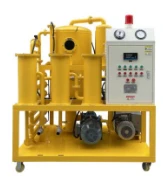
First off, let’s get one thing straight: Flaxseed oil isn’t your average cooking oil. It’s a cold-pressed oil (for the most part) that’s super high in unsaturated fats—specifically omega-3s, which is why it’s such a hot item for health-conscious folks and gourmet cooks. But that same high omega content makes it way more fragile than, say, peanut or corn oil. It goes rancid fast when exposed to heat, light, or oxygen, and it has a lower smoke point too—like 225°F to 230°F, compared to canola’s 400°F. Now, a cooking oil purifier works by separating gunk—like plant debris, residual water, and free fatty acids (FFAs)—from oil, right? But how does that apply to flaxseed?
Wait, let’s start with what a standard purifier does. Most of the purifiers my company makes are centrifugal or filter-based. Centrifugal ones spin the oil at super high speeds to separate denser impurities from the oil, since the gunk is heavier than the oil itself. Filter ones use paper or cloth filters to trap solid particles. For regular oils, that works great because the oil is stable, and the impurities are easy to separate. But flaxseed oil has quirks that can throw this off.
Let’s talk about the bad stuff first. When you press flaxseeds, you get all sorts of stuff mixed in: broken seed husks, fine fiber particles, maybe a little water from the pressing process. If you leave that in, the oil will go bad way quicker—those impurities speed up oxidation, which is what makes oil smell like old crayons or wet cardboard. So in theory, a purifier should help with that, right? Yeah, that part checks out. But here’s the catch: Flaxseed oil’s viscosity is different too. At room temp, it’s thinner than olive oil, but when it’s cool, it gets thick as molasses. Most purifiers are calibrated for oils that stay consistent in viscosity, but flaxseed’s changes can mess with how the centrifugal force works, or how evenly the oil flows through a filter.
Another thing: FFAs. Free fatty acids are what form when oil breaks down, and they’re a big no-no because they make oil taste off and reduce its shelf life. Standard purifiers can remove some FFAs, but flaxseed’s FFAs are more soluble in the oil than, say, those in coconut oil. So a basic purifier might only strip out like 10-15% of the FFAs in flaxseed, which isn’t enough for it to stay fresh for more than a couple weeks. If you’re making flaxseed oil for personal use, that might be okay, but if you’re selling it, you need lower FFA levels (usually under 0.5% for cold-pressed commercial oil). That means a standard purifier is going to fall short here.
Wait, but what if you’re using a purifier that’s adjustable? Like, some of the mid-tier purifiers we sell let you tweak spin speeds or filter mesh size. For flaxseed, you’d want a slower spin speed—too fast and you might emulsify the oil with the tiny water droplets in it, which makes it even harder to separate. And you’ll need a finer filter, like a 1-micron filter, instead of the 5-micron ones we use for sunflower. That’ll trap the tiny flax fiber particles that a standard filter misses. But even then, you’ve got to be careful with temperature. If you heat the flaxseed oil a little before purifying—like up to 100°F—its viscosity drops, so it flows better through the purifier, and the centrifugal separation works way more efficiently. But don’t heat it too much! If you go over 120°F, you’ll start destroying those omega-3s, which is the whole point of making flaxseed oil in the first place. That’s a key tip I give everyone testing this: low heat, not high.
Now, let’s talk about what happens if you use the wrong purifier settings. I’ve had a few customers try to use our standard purifier for flaxseed without adjusting anything, and what happened? Their oil came out cloudy, and it went rancid in 3 days instead of 2 weeks. Why? Because they didn’t trap the fine fiber, so that fiber was oxidizing the oil from the inside out. Or they spun it too fast, so tiny water droplets got mixed into the oil, and water is a huge trigger for flaxseed oil to go bad. So it’s not that you can’t use a cooking oil purifier for flaxseed oil—it’s that you have to use the right settings, and not all purifiers are built to handle flaxseed’s specific needs.
Wait, what about cold pressing vs. refining? If you’re making refined flaxseed oil (which is processed at higher temps, though I don’t recommend it because it kills the nutrients), then a standard purifier works a lot better. Refined flaxseed oil is more stable, has a higher smoke point (around 400°F), and the impurities are bigger and easier to separate. But 90% of the people asking this are talking about cold-pressed flaxseed oil, which is the one that’s good for you. For that, you need a purifier that’s designed for delicate, low-smoke-point oils. That’s a big reason we’ve been making a line of purifiers specifically for small-batch cold-pressed oils—flax, hemp, walnut, all that stuff. They have adjustable spin speeds, fine mesh filters, and temperature controls that keep the oil under 120°F the whole time.
Let me also address a common myth I hear: “I can just filter flaxseed oil through a coffee filter instead of buying a whole purifier.” Yeah, that works for home use if you only make a cup or two at a time. But if you’re making 5 gallons or more, a coffee filter is way too slow, and you’ll end up wasting half the oil because it seeps through. A purifier is way more efficient for larger batches, and it removes way more impurities than a home filter. But again, not just any purifier—you need one that’s set up for flax.
Another thing to consider: shelf life. If you purify flaxseed oil correctly with the right purifier, you can get a shelf life of 2-3 months, compared to just a week or two if you leave the impurities in. That’s a game-changer for small producers who want to sell their oil at farmers markets or online. I had a customer last year who was selling homemade flaxseed oil, and people were complaining it went bad too fast. She switched to one of our adjustable purifiers, adjusted the spin speed, used a fine filter, and heated the oil a little before purifying. Now her oil lasts 2.5 months, and her repeat customers tripled. That’s the kind of win I love seeing.
But wait, what if you’re on a budget? A lot of people don’t want to drop a ton of money on a specialized purifier. If you already have a standard centrifugal purifier, you can make it work for flaxseed as long as you tweak a few things: slow the spin speed by about 20%, use a 1-micron filter instead of the standard 5, and warm the oil up to 90-100°F before running it through. It won’t be as effective as a specialized one, but it’ll be way better than not purifying at all. And if you’re only making small batches, even a basic purifier works.
Let’s wrap this up. So can a cooking oil purifier be used for flaxseed oil? The short answer is yes—but not all purifiers work, and you can’t just use the same settings you use for canola or sunflower. The key points are: flaxseed oil is fragile, so you need low heat during purification, slower spin speeds (if it’s centrifugal), and finer filters. If you’re making commercial cold-pressed flaxseed oil, it’s worth investing in a purifier designed for delicate oils to get the best shelf life and quality. If you’re a home user or small batch, you can tweak a standard purifier to work, just don’t skip the temperature check or filter size.

Now, if you’re ready to stop guessing and figure out exactly what setup works for your flaxseed oil—whether you’re a home hobbyist, a small farm, or a micro food producer—hit us up to connect and chat through what you need. We don’t do one-size-fits-all here, so we’ll help you pick the right purifier, or adjust the one you already have, to get the cleanest, longest-lasting flaxseed oil possible.
Phosphate Ester Fire-Proof Oil Purifier References:
- USDA FoodData Central. (n.d.). Fatty acid content of flaxseed oil. U.S. Department of Agriculture.
- American Oil Chemists’ Society. (2019). Purification methods for cold-pressed specialty oils. Journal of the American Oil Chemists’ Society.
- Small Farm Quarterly. (2021). Shelf life optimization for small-batch flaxseed oil producers. National Small Agriculture Association.
Chongqing TOP Oil Purifier Co., Ltd.
Chongqing TOP Oil Purifier Co., Ltd. is one of the most experienced cooking oil purifier manufacturers and suppliers in China. Please rest assured to buy CE approved cooking oil purifier made in China here from our factory. We also accept customized orders.
Address: No.1, Jianlong North Rd, Jiulongpo District, Chongqing, China
E-mail: sales@topoilpurifier.com
WebSite: https://www.xboilpurifier.com/
