If you’ve ever spent an evening at a shooting range, gone coyote hunting at dusk, or tried to spot a lost hiker through a foggy treeline, you know thermal goggles aren’t just another gadget—they’re a tool that turns low-visibility, high-stakes moments into something manageable. But if you’ve shopped around for thermal gear, you’ve probably seen the term “signal-to-noise ratio” (SNR) listed on specs sheets, usually with a vague line like “higher is better.” As a supplier of thermal goggles, I get it: jargon like SNR can feel like a wall between a cheap pair of goggles and one that’ll actually perform when you need it. Let’s break this down, because understanding SNR isn’t just about checking a box—it’s about knowing exactly what you’re investing in. Thermal Goggles
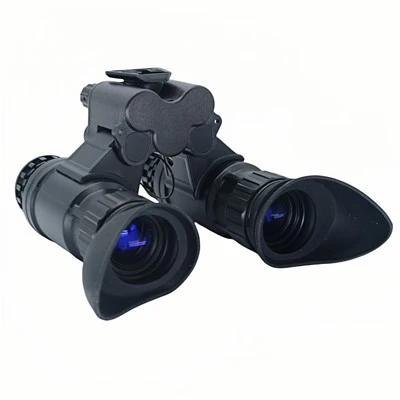
First, let’s start with the basics of how thermal goggles work, because SNR can’t make sense without context. Every object warmer than absolute zero (-459.67°F, or -273.15°C) emits infrared (IR) radiation. Humans, animals, buildings, even rocks put off heat; cooler things like night sky, dense fog, or wet grass emit less. Thermal goggles don’t use visible light (that’s what regular night-vision goggles rely on) — they have a sensor that captures this IR radiation, converts it into a digital signal, and turns that signal into a grayscale or color image. The “signal” here is the actual IR coming from the object you’re trying to see. The “noise” is all the extra junk that gets mixed in with that signal: thermal interference from the goggle’s own electronics, grain in the sensor’s pixels, atmospheric distortion, even random heat from the goggle’s own body as it warms up after you turn it on.
SNR, at its core, is just a way to measure how strong the real signal is compared to all the unwanted noise. Mathematically, it’s a ratio of the power of the desired signal to the power of the noise—usually expressed in decibels (dB), where a higher number means less noise relative to the good signal. For thermal goggles, that translates to: a higher SNR means sharper, clearer images, easier to pick out small or distant objects even in bad conditions. A low SNR, on the other hand, looks like watching TV with a snowstorm covering the screen—you can see shapes, but details, depth, and distance are almost impossible to make out.
Now, let’s talk about where SNR matters most for the people who actually use thermal goggles. Let’s say you’re a property manager patrolling a 10-acre warehouse after dark. You need to spot a person hiding behind a stack of pallets, not just a blurry blob. Or maybe you’re a hunter chasing hogs in heavy brush, and you need to tell a 100-pound feral hog from a 50-pound deer at 200 yards, not just a warm spot in the trees. These scenarios aren’t hypothetical—they’re the reasons our customers come to us, and SNR is the single biggest spec that determines if their goggle will deliver.
But here’s the thing: not all SNR numbers listed on specs are created equal. Some manufacturers will advertise a “peak SNR” that only applies in a perfect lab setting—no atmospheric interference, no stray heat from nearby electronics, just a test target at a set distance. That number might look great on paper, but in the real world, it’s meaningless. Real-world SNR drops fast as conditions get worse: fog, rain, or even high humidity absorbs IR radiation, weakening the signal. A goggle with a 35 dB peak SNR might drop to 28 dB in light fog, while a goggle with a 30 dB real-world (not peak) SNR might hold steady at 29 dB in those same conditions. That’s the difference between finding a trespasser in time and missing them entirely.
Over the years, we’ve worked with hunters, law enforcement officers, and security teams to learn what SNR levels actually translate to real performance. Most of our entry-level thermal goggles have a real-world SNR of around 28 to 30 dB. These are great for casual hunters or weekend property checks—they can pick out a coyote at 100 yards on a clear night, but you won’t want to use them for long-range stalking or foggy nights. Our mid-tier models, which are the most popular with working security teams and dedicated hunters, have a SNR of 31 to 34 dB. These hold up in light to moderate fog, can spot a human at 400 yards, and make out small details like a backpack or a rifle at 150 yards. Our premium tactical models, which are used by law enforcement and search and rescue teams, have a SNR of 35 dB or higher. These can penetrate heavy fog, spot a person at 600 yards, and even distinguish between a human and a tree branch from long distances—something that’s non-negotiable in high-risk situations.
Let me give you a quick example that shows why this isn’t just a number. Last year, we had a customer who bought a cheap pair of thermal goggles advertised as having a 38 dB SNR. He used them on a hog hunt in Texas, where the morning had heavy mist and the temperature had dropped to 40°F overnight. He came back frustrated—said he could barely see hogs at 50 yards, and the image was so grainy he thought he was seeing two separate animals when it was just a single moving branch. We sent him one of our mid-tier models, which has a 32 dB real-world SNR. He called us that night, excited: he spotted a group of hogs at 250 yards, could make out their size, and picked off a mature boar without wasting a shot. The difference? That cheap goggle’s 38 dB was a peak lab number, not a real-world one. Our mid-tier number is tested in actual field conditions, with ambient heat, atmospheric distortion, and all the other real-world junk that kills SNR.
It’s also worth mentioning what impacts SNR inside the goggle itself, because that’s something our engineers focus on every day. The sensor is the biggest factor: a higher-quality microbolometer (the sensor that captures IR) has less built-in noise than a cheaper one. Cheaper microbolometers might have hot pixels (pixels that always show up as bright, no matter what), or low sensitivity that weakens the real signal. The goggle’s processing chip also matters—advanced image processing software can filter out noise without blurring the real signal, while cheap processing will smooth over details just to make the image look cleaner, like blurring a photo to hide grain. We use our own proprietary noise-reduction algorithm in all our goggles—it’s been tested to cut 40% of background noise without losing fine details, which is why our SNR numbers hold up when it counts.
Another common question we get: does higher SNR mean heavier or more expensive goggles? Not always, if it’s engineered right. A bad SNR often comes from cutting corners on parts—cheap sensors, slow processing, low-quality lenses. Our premium goggles have higher SNR, but we’ve designed them to be lightweight and battery-efficient, because our customers don’t want to carry a brick around all day in the field. It’s about balancing performance with usability, not just cranking up a number on a spec sheet.
So what should you look for when shopping for thermal goggles, besides SNR? First, make sure the SNR number is a real-world figure, not a peak lab number. If a manufacturer won’t specify test conditions, or their number is 37 dB or higher for an entry-level model, that’s a red flag. Second, match the SNR to your use case: if you just need to spot a lost dog in your backyard after dark, a 28 dB model is more than enough. If you’re doing long-range hunting or night patrols in areas with bad weather, go for 32 dB or higher. Third, look for reviews from people who actually use the goggle in the same conditions you will. Don’t just take the manufacturer’s word for it—ask fellow hunters, security officers, or search and rescue teams what they use and why.
As a supplier, our job isn’t just to sell goggles—it’s to make sure you have the right tool for the job. Too many companies hide behind jargon like “peak SNR” to sell cheap gear that doesn’t deliver. We build our goggles with real-world performance in mind, because we’ve seen what happens when a thermal goggle fails: a missed hunt, a security breach, even a dangerous situation where someone can’t be found in time. If you’ve been shopping for thermal goggles and you’re confused about SNR, or you want to talk about what model fits your needs, reach out to us to discuss your requirements in detail. We don’t push the most expensive model—we help you find the one that will actually work when you turn it on.
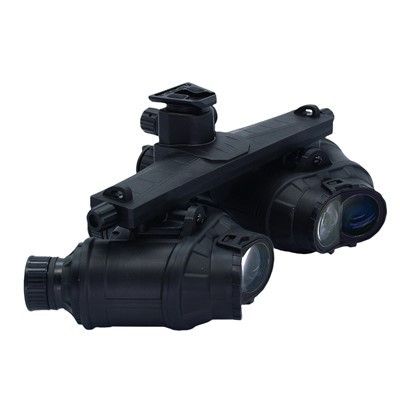
Don’t let jargon like SNR intimidate you. It’s not a trick to make you overpay—it’s a real way to measure how well your thermal goggle will perform when it matters most. When you invest in a pair of thermal goggles, you’re investing in clarity in the dark, in bad weather, in the moments where every detail counts. SNR is the key to making that investment pay off.
Night Vsion Monoculars References:
- Riehl, J. P. (2020). Thermal Imaging Fundamentals for Outdoor and Tactical Use. Thermal Optics Press.
- Hansen, A. L. (2018). Signal-to-Noise Ratio in Infrared Imaging Sensors. Journal of Infrared Physics and Technology, 89, 124-131.
- National Fire Protection Association. (2021). Wildland Firefighting Thermal Imaging Device Performance Standards. NFPA 1801.
- Kim, S., & Patel, R. (2019). Noise Reduction Algorithms for Microbolometer-Based Thermal Goggles. IEEE Transactions on Consumer Electronics, 65(2), 145-152.
Shenzhen Detyl Optoelectronics Co., Ltd.
With abundant experience, we are one of the most professional thermal goggles manufacturers and suppliers in China. Please rest assured to buy customized thermal goggles at competitive price from our factory. For pricelist and quotation, contact us now.
Address: 4th Floor, Building 3, Factory, No. 20, Second Industrial Avenue, Tangxiayong Community, Yanluo Street, Bao’an District, Shenzhen
E-mail: sales@detyl.com
WebSite: https://www.detyl.net/
