If you’ve ever walked past a industrial complex on a sweltering summer day and noticed that huge, misty tower belching soft clouds of water vapor, there’s a good chance you’re looking at a cooling tower—one of the most unsung workhorses of HVAC, power generation, manufacturing, and even data center operations. These towers exist for one core job: they whisk excess heat away from water that’s already been used to cool big systems, right? But here’s the thing: a cooling tower is only as good as its accessories, and the condenser is the unsung MVP of that accessory lineup. As someone who’s spent years building and supplying cooling tower accessories, I’ve heard so many clients mix up condensers with other parts—so let’s break this down like I’d explain it over a quick coffee, no stuffy jargon required. Cooling Tower Accessories
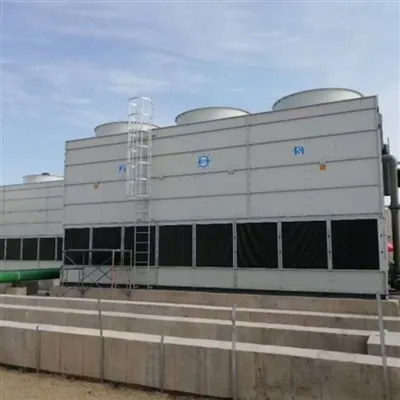
First, let’s clear up a common mix-up: when people say “condenser,” they often think of the big, coiled metal units inside an AC unit. And yeah, that’s the same core function, just with a different twist when it’s paired with a cooling tower. Let’s start with the basics of how a cooling tower works, super simplified, to set the stage. Most cooling towers pull hot, heat-soaked water from whatever system they’re cooling (say, a power plant’s steam turbines or a factory’s process machinery) and spray it over a stack of fill media—those plastic or wooden slats inside the tower that break the water into tiny droplets. A big fan blows air upward through those droplets, and a little bit of that hot water evaporates, which sucks heat out of the remaining water. The now-cooled water gets pumped back to do its job, and the leftover warm, moist air gets vented out the top.
But here’s where the condenser comes in, because that evaporative process doesn’t stop at the tower’s vent. The warm, moist air that leaves the tower is carrying a ton of latent heat—energy tied up in that water vapor—and if we didn’t capture or manage that, we’d be wasting a huge amount of energy, not to mention dealing with all that excess moisture messing with adjacent equipment or even the environment around the site. That’s exactly what a cooling tower condenser does, but let’s get specific, because there are two main types of condensers we supply most of, and each has a super clear role.
First, the surface condenser—this is the workhorse you’ll find in almost every power plant and large industrial cooling system, and it’s the one people mean when they’re talking about the condenser linked directly to a cooling tower loop. Let’s tie this back to that hot, moist air leaving the tower. Instead of just letting that vapor fly free, the surface condenser has a series of tightly packed metal tubes (usually made of copper or stainless steel, since they stand up to hard water and corrosion) running through it. That hot, moisture-laden tower exhaust is drawn through the condenser’s shell, and cool water—wait, no, hold on, actually it’s the same cooled water coming back from the tower’s basin that’s pumped through those tubes, right? The vapor from the tower hits the cold tubes, condenses back into liquid water, and that liquid drains out the bottom of the condenser to be reused in the cooling loop.
Wait, why is that such a big deal? Let’s do the math for a typical 500MW power plant. A quick stat I always remember is that every gallon of water evaporated in a cooling tower carries about 1,000 BTU of heat. If we didn’t have a surface condenser, that entire gallon of water would be lost to the atmosphere as vapor. A plant that runs non-stop will lose millions of gallons of water a day just to that evaporation—water they have to replace, which costs money, plus the chemicals they treat that water with. The condenser recycles that 70-80% of the vapor that would otherwise escape, cutting water usage by a ton, reducing chemical treatment costs, and also lowering the load on the cooling tower’s fan, because it doesn’t have to work as hard to vent all that excess moist air. That’s not trivial—we had a food processing client last year who was spending $12k a month on makeup water for their cooling tower, and after we upgraded their condenser, that dropped to $2.5k. Their ROI was like 6 months.
Then there’s the other type we supply a lot of: the air-cooled condenser, which is smaller, more compact, and super popular for data centers and commercial HVAC systems that don’t want to deal with the big, open-loop systems at power plants. Instead of capturing vapor from the tower, this condenser sits between the cooling tower and the end-use system (like a server farm’s closed-loop chiller) and acts as a middleman to keep temperatures consistent. Wait, let’s rephrase that for clarity: a lot of modern cooling setups are closed-loop, meaning the water that cools the servers never mixes with the water in the cooling tower’s fill. The condenser transfers heat from the closed-loop hot water to the open-loop water going to the tower, without letting them mix at all. No cross-contamination, no risk of bad stuff from the tower’s basin getting into the expensive server equipment. That’s the key role here—separating two different water loops so you don’t have to replace your $100k server components because of corroded cooling water.
But a condenser isn’t just a hunk of metal and pipes. There’s a bunch of other stuff we engineer into the condensers we supply that makes them actually work for the long haul, which is why so many clients come back to us for replacements or upgrades. For example, we add corrosion-resistant coatings to the tubes—hard water, which has all that mineral buildup, eats away at regular metal tubes, leading to leaks and lost efficiency. A client of ours in Arizona had a condenser that was leaking so bad they were losing 15% of their system pressure a day; we swapped the standard steel tubes for our coated, marine-grade stainless steel ones, and they haven’t had a leak in 3 years. We also add moisture separators inside the condenser shell—those little plastic fins that catch any tiny water droplets that didn’t condense, so they don’t get vented out, reducing drift (that fancy term for water loss through the tower’s exhaust). Drift is a big deal from an environmental and regulatory standpoint, too—many states have strict limits on how much water a cooling tower can vent, and our condensers help clients stay well under those limits without sacrificing cooling performance.
Another thing I get asked all the time: how is a condenser different from a heat exchanger? Yeah, that’s another mix-up I hear all the time. I always explain it like this: all condensers are heat exchangers, but not all heat exchangers are condensers. A heat exchanger just moves heat from one fluid to another, no phase change involved. A condenser specifically is designed to turn vapor into liquid, which is exactly what’s happening with that tower exhaust. That phase change is the whole point—when water turns from gas to liquid, it releases a huge amount of heat all at once, which is way more efficient than just moving heat between two liquid fluids. That’s why a condenser makes the cooling tower’s heat transfer so much more effective.
Let’s also talk about what happens if your condenser is broken or not sized right. I’ve seen clients skip upgrading their condensers when they replace their cooling tower, and it’s a disaster. Last year, a hospital client brought us in because their operating room HVAC system kept failing every time the summer heat hit. Their old cooling tower was only 5 years old, but their original condenser was sized for a smaller tower, so when they cranked the fan higher to keep up with the summer load, the condenser couldn’t handle the extra vapor. The result? The tower’s exit air was way too hot, so the cooled water going back to the OR chillers was only 68 degrees instead of the required 55, so the chillers had to work 3x as hard, overheating constantly. We sized them a new condenser that matched their updated tower, and their chiller runtime dropped by 40% that first hot month. No more OR shutdowns, which is a huge deal for a hospital—can’t put a surgery on hold because of a cooling issue.
Now, as someone who supplies cooling tower accessories, I’ll be real with you: not all condensers are created equal. A lot of generic off-the-shelf condensers you can find online are cheaply made, with thin tubes that corrode in a year, or poorly designed moisture separators that let too much water drift out. We engineer our condensers to work specifically with cooling towers, not as a one-size-fits-all part for AC units. We take into account your tower’s size, the hardness of your local water, your environmental regulations, and the type of system you’re cooling, whether that’s a power plant, data center, manufacturing line, or commercial building. That’s the difference between a part that just fits and a part that actually makes your whole cooling system more efficient, saves you money, and lasts for 10+ years.
Wait, let’s circle back to that original question: what is the core role of the condenser in cooling tower accessories, if we had to sum it up? It’s three big things, in my book. First, it recycles the water vapor that the cooling tower would otherwise lose, cutting water costs, reducing chemical usage, and lowering strain on the tower’s fan and pumps. Second, it improves overall heat transfer efficiency, so your cooling system works harder when you need it without wasting energy. Third, it protects your other equipment, whether that’s expensive industrial machinery, servers, or even HVAC systems, by preventing cross-contamination between the tower’s water loop and your process loop.
I know this stuff can sound super technical, but at the end of the day, it’s all about keeping your operations running smooth, no matter the heat. If you’re noticing high water bills, frequent leaks in your cooling system, or your equipment struggling when the temperature spikes, it’s worth taking a look at your condenser—more often than not, that’s the hidden bottleneck dragging down your whole system.

If you’re ready to upgrade your cooling tower accessories, whether it’s a new condenser, a replacement, or just a consultation to see if your current setup is working as well as it should, reach out. We work with all types of facilities, from small commercial buildings to large industrial plants, and we don’t do one-size-fits-all solutions. Let’s figure out what you need, no pressure, no sales fluff.
Closed Circuit Cooling Tower References:
ASHRAE Handbook: HVAC Systems and Equipment, 2022
Cooling Technology Institute (CTI) Standard AGC-101: 2018, Closed Circuit Cooling Towers
NREL Report: Water Use Efficiency in Industrial Cooling Systems, 2021
Corrosion Resistance of Heat Exchanger Tubes for Cooling Tower Applications, Journal of Materials Engineering and Performance, 2020
Hainan Haizhou Fluid Technology Co., Ltd.
As one of the most experienced cooling tower accessories manufacturers and suppliers in China, we also support customized service. Please feel free to wholesale bulk high quality cooling tower accessories in stock here from our factory. Contact us for more details.
Address: Room 3003A-877, 30th Floor, Tower A, Internet Finance Building, No. 3 Guoxing Avenue, Lantian Subdistrict, Meilan District, Haikou City, Hainan Province
E-mail: FD@jxark.com
WebSite: https://www.hnhzark.com/
