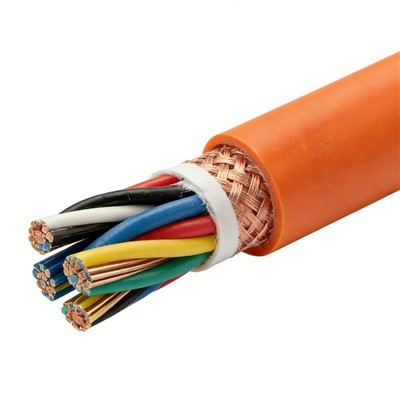
Elevator traveling cables play a crucial role in the operation of elevators, serving as the lifeline that provides power, signals, and data transmission between the elevator car and the control system. As an elevator traveling cable supplier, I’ve had the privilege of witnessing the diverse regulatory landscapes across different countries. In this blog, I’ll delve into the regulations governing elevator traveling cables in various parts of the world, shedding light on the standards and requirements that ensure safety and reliability. Elevator Traveling Cable
North America
In North America, the elevator industry is primarily regulated by the American Society of Mechanical Engineers (ASME). The ASME A17.1 standard is the cornerstone of elevator safety in the United States and Canada. This standard sets forth detailed requirements for elevator traveling cables, including their construction, installation, and maintenance.
One of the key aspects of the ASME A17.1 standard is the requirement for cables to have sufficient strength and flexibility to withstand the rigors of elevator operation. Cables must be able to handle the weight of the elevator car, passengers, and any additional loads, as well as the forces generated during acceleration, deceleration, and stopping. Additionally, the standard mandates that cables be resistant to abrasion, corrosion, and environmental factors such as heat, cold, and moisture.
Another important requirement of the ASME A17.1 standard is the need for proper cable installation. Cables must be installed in accordance with the manufacturer’s instructions and industry best practices to ensure they are properly tensioned and secured. Improper installation can lead to cable failure, which can result in serious safety hazards.
In addition to the ASME A17.1 standard, the National Fire Protection Association (NFPA) also plays a role in regulating elevator traveling cables. The NFPA 70 National Electrical Code (NEC) sets forth requirements for the electrical installation of elevators, including the use of proper wiring and grounding. These requirements help to prevent electrical fires and other safety hazards.
Europe
In Europe, the elevator industry is regulated by the European Union’s Machinery Directive (2006/42/EC) and the EN 81 series of standards. These standards are designed to ensure the safety and reliability of elevators and their components, including traveling cables.
The EN 81 series of standards covers a wide range of elevator-related topics, including cable design, construction, and testing. One of the key requirements of these standards is the need for cables to be designed and manufactured to withstand the specific operating conditions of the elevator. This includes factors such as the elevator’s speed, load capacity, and the number of stops.
In addition to the EN 81 series of standards, the European Committee for Electrotechnical Standardization (CENELEC) also plays a role in regulating elevator traveling cables. CENELEC standards cover the electrical aspects of elevator systems, including the use of proper wiring and grounding. These standards help to ensure the safety and reliability of the electrical components of elevators.
Asia
In Asia, the regulations governing elevator traveling cables vary from country to country. However, many Asian countries have adopted international standards such as the ASME A17.1 and the EN 81 series of standards.
In China, for example, the elevator industry is regulated by the General Administration of Quality Supervision, Inspection and Quarantine (AQSIQ) and the Standardization Administration of China (SAC). These organizations have developed a series of national standards for elevators and their components, including traveling cables. These standards are similar to the ASME A17.1 and the EN 81 series of standards and are designed to ensure the safety and reliability of elevators in China.
In Japan, the elevator industry is regulated by the Ministry of Land, Infrastructure, Transport and Tourism (MLIT). The MLIT has developed a series of standards for elevators and their components, including traveling cables. These standards are designed to ensure the safety and reliability of elevators in Japan and are similar to the ASME A17.1 and the EN 81 series of standards.
Other Regions
In addition to North America, Europe, and Asia, there are also regulations governing elevator traveling cables in other regions of the world. For example, in Australia, the elevator industry is regulated by the Australian Building Codes Board (ABCB). The ABCB has developed a series of standards for elevators and their components, including traveling cables. These standards are designed to ensure the safety and reliability of elevators in Australia and are similar to the ASME A17.1 and the EN 81 series of standards.
In South America, the elevator industry is regulated by a variety of national and regional organizations. For example, in Brazil, the elevator industry is regulated by the Brazilian Association of Technical Standards (ABNT). The ABNT has developed a series of standards for elevators and their components, including traveling cables. These standards are designed to ensure the safety and reliability of elevators in Brazil and are similar to the ASME A17.1 and the EN 81 series of standards.
Conclusion

In conclusion, the regulations governing elevator traveling cables vary from country to country. However, many countries have adopted international standards such as the ASME A17.1 and the EN 81 series of standards to ensure the safety and reliability of elevators and their components. As an elevator traveling cable supplier, it is important to stay up-to-date on the latest regulations and standards in each country where we do business. By ensuring that our cables meet or exceed these standards, we can help to ensure the safety and reliability of elevators around the world.
Multi Core Flexible Cable If you’re in the market for high-quality elevator traveling cables, I encourage you to reach out to me. I’d be happy to discuss your specific needs and provide you with a quote. Whether you’re a building owner, elevator installer, or maintenance provider, I’m confident that I can provide you with the right cables for your project.
References
- American Society of Mechanical Engineers (ASME). (2023). ASME A17.1 – Safety Code for Elevators and Escalators.
- European Committee for Electrotechnical Standardization (CENELEC). (2023). EN 81 series of standards for elevators.
- General Administration of Quality Supervision, Inspection and Quarantine (AQSIQ) and Standardization Administration of China (SAC). (2023). National standards for elevators in China.
- Ministry of Land, Infrastructure, Transport and Tourism (MLIT). (2023). Standards for elevators in Japan.
- Australian Building Codes Board (ABCB). (2023). Standards for elevators in Australia.
- Brazilian Association of Technical Standards (ABNT). (2023). Standards for elevators in Brazil.
Cixi Davos Wire & Cable Co., Ltd.
As one of the most professional elevator traveling cable manufacturers and suppliers in China, we also support customized service. Please feel free to buy bulk high quality elevator traveling cable in stock here from our factory. For price consultation, contact us.
Address: No.3, Lane 91, Ruan Ding Road, Linxi Village, Xiaolin Town, Cixi City
E-mail: roy798@163.com
WebSite: https://www.cj-supplychain.com/
