If you’re in the market for a cooling mist generator—whether you’re outfitting a commercial patio, a warehouse, or a backyard oasis—you’ve probably stumbled on “flow rate” at some point. It’s one of the first specs suppliers throw around, and it’s easy to gloss over it as just a number… but that’s a mistake. The flow rate isn’t just a technical detail; it’s the backbone of how well your mist system actually works. As a supplier who’s fielded hundreds of calls from confused customers, I’ve seen guys buy a cheap unit with a “high flow rate” only to end up with soggy furniture, wasted water, and no real cooling. Today, let’s break down what flow rate actually means for a cooling mist generator, why it matters, and how to nail the right number for your space. Cooling Mist Generator
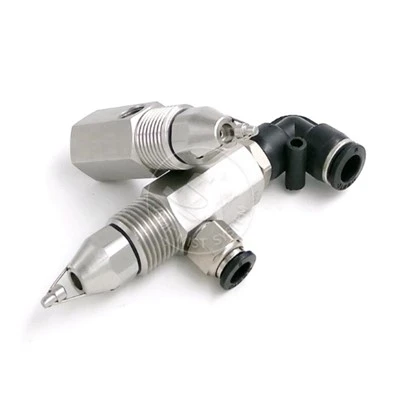
First off, let’s get the basics straight: what’s flow rate, anyway? In simple terms, it’s how much water the unit pushes out over a set amount of time. For mist generators, we almost always measure it in gallons per minute (GPM) or sometimes liters per minute (LPM) for folks on the metric side. Unlike regular garden hoses that blast big water droplets, mist generators fine-tune that flow to turn water into tiny droplets—usually 5 to 50 microns, so small they feel like a cool breeze, not a drizzle. So flow rate isn’t just volume; it’s the volume of tiny, cooling droplets, not wasted big water drops that hit the ground before they can evaporate.
That’s the key difference I love to hammer home. A lot of no-name suppliers will brag about a 2 GPM flow rate, but if that rate is only pushing half-millimeter droplets (think light rain), you’re not cooling anyone—you’re just making things wet. A good cooling mist generator’s flow rate is calibrated to prioritize droplet size and evaporation, not just raw volume. So when I tell a customer, “Our unit has a 0.8 GPM flow rate,” I’m not saying it’s less powerful; I’m saying it’s moving exactly enough water to turn into those tiny, evaporative droplets that pull heat out of the air. If you go too high, you get saturation; too low, and you don’t get enough cooling for the space.
Now, let’s tie flow rate to real-world use cases, because that’s where it stops being a textbook term and starts mattering. Let’s start with small spaces first—like a 10×10 backyard patio for a residential deck. A flow rate of 0.2 to 0.5 GPM is perfect here. Why? A residential patio doesn’t need a ton of mist; too much, and your patio set will get damp, and you’ll waste water. I had a customer last summer who bought a unit with a 1 GPM flow rate for his small deck, and by the end of the night, his patio cushions were ruined, and he was using 20 gallons of water a day just for a tiny space. That’s the mistake of chasing “high flow” without context. For residential use, stick to the lower end of that scale unless you have a huge open backyard.
Next, medium commercial spaces—think a restaurant patio that’s 20×30, or a small warehouse loading dock. Here, you’ll want a flow rate of 0.6 to 1.2 GPM. This is where the balance hits. The space is big enough that you need more mist to keep people cool, but it’s not so large that you need industrial gear. Our most popular unit for restaurants falls right in the middle at 0.9 GPM, and our customers rave about it: no soggy tables, the mist covers the whole patio, and the temperature drops 10 to 15 degrees in 10 minutes, which is exactly what diners care about. If you went lower than 0.6 here, the edges of the patio would be warm, and guests would complain it’s not working. If you went higher than 1.2, you’d end up with puddles on the concrete, which is a slip hazard, plus extra water bills.
Then there are large industrial or open-air spaces—like a 50×100 event tent, a factory floor, or a outdoor sports venue. For these, you’ll need a flow rate of 1.3 to 2.0 GPM. Industrial spaces have big areas, sometimes with heat-generating equipment, so you need more mist to cover ground and pull excess heat out. I recently worked with a warehouse that was running at 110 degrees in the summer—they tried a small mist unit that only put out 0.7 GPM, and it only cooled the area right around the unit. We installed three of our high-flow units (each 1.5 GPM) along the loading dock, and now the floor stays around 85 degrees, which is a game-changer for their workers’ productivity. But here’s the catch: even in these big spaces, you still want droplets in the 10 to 30 micron range, not big ones. The high flow rate here is about covering space, not dumping water.
Now, let’s talk about what else affects flow rate, because it’s not just the number on the box. A lot of customers don’t realize that your water pressure plays a huge role. If your home’s water pressure is only 30 PSI, a unit rated for 1 GPM won’t actually push out 1 GPM—it might only put out 0.6, no matter what the spec sheet says. On the flip side, if you have a well with 80 PSI, you might get more flow than the unit is designed for, which could make droplets too big, leading to sogginess. We always tell customers to check their water pressure first—most residential homes are 40 to 60 PSI, which is the sweet spot for our units. If yours is too low, a simple pressure booster will fix it, and if it’s too high, a regulator is cheap insurance to keep your mist working right.
Another factor: mist nozzle quality. Not all nozzles are the same. A cheap nozzle might clog, which reduces flow rate over time, or it might not atomize water properly, so even if the unit says 1 GPM, you’re only getting half that in usable mist. Our units use stainless steel nozzles with a 10-micron filter, so they stay consistent, and the flow rate stays right on spec for years. We had a customer who bought a competitor’s unit for their restaurant; after a month, their nozzles were clogged, the flow rate dropped by 40%, and their cooling was gone. He switched to ours, and he hasn’t had that issue. So flow rate is tied to build quality, not just the pump.
Wait, let’s clear up a common myth: higher flow rate = better cooling. That’s not true at all. Cooling from mist happens when droplets evaporate, and evaporation only works if the droplets are small enough. If you have a 2 GPM flow rate with 100-micron droplets, those big drops fall to the ground before they can evaporate, so you get zero cooling, just wet floors. A 0.8 GPM flow rate with 15-micron droplets will evaporate in mid-air, pulling heat out, so you get way more cooling per gallon of water. I test this all the time at our showroom: we have two side-by-side units, one with 1.5 GPM, one with 0.8 GPM. If you stand 10 feet away, the 0.8 GPM feels way cooler—because the droplets are tiny and evaporate fast—while the 1.5 GPM feels like a light rain. That’s the biggest mistake customers make: chasing high GPM without realizing how it affects droplet size and cooling.
Now, how do you calculate the right flow rate for your space, step by step? Let’s make it simple, no complicated math. First, measure the area you want to cool (length x width, in feet). Then:
- If it’s under 150 sq ft (small residential patio, deck): 0.2 – 0.5 GPM
- 150 – 500 sq ft (medium restaurant patio, small event space): 0.6 – 1.2 GPM
- Over 500 sq ft (industrial loading dock, large event tent, factory floor): 1.3 – 2.0 GPM
That’s it, no fancy formulas. Of course, if you have a space with a lot of heat sources—like a grill on a patio, or welding equipment in a warehouse—add 0.2 to 0.5 GPM to that number, because extra heat needs extra mist to counteract it.
What about maintenance and flow rate over time? A lot of people ignore this, but it’s important. If you don’t clean your nozzles every few weeks, mineral buildup from tap water will clog them, which reduces flow rate. We recommend a quick rinse of the nozzles every two weeks, and a deep clean once a month with a vinegar solution to dissolve mineral deposits. If you skip that, your flow rate will drop, and your cooling will suffer. We have a ton of customers who come back after a year saying their unit isn’t working as well—it’s almost always clogged nozzles, not a bad pump. That’s an easy fix, so it’s worth remembering.
Now, let’s address a question I get all the time: can I combine multiple units to get the right flow rate for a big space? Absolutely. For example, if you have a 1,000 sq ft event tent, you don’t need a single 2 GPM unit. You can use two 1 GPM units placed 10 feet apart, and that will cover the space evenly, with better airflow than one big unit. That’s actually a better setup, because multiple small units avoid dead spots where mist doesn’t reach, and they’re easier to maintain. We’ve had event planners use this trick for years, and it works way better than one high-flow unit.
So, wrapping this up: flow rate isn’t just a number on a spec sheet. It’s a tool, and to get the best cooling, you need to match it to your space, prioritize droplet size over raw volume, and account for your water pressure and nozzle quality. Chasing the highest GPM you can find will only lead to soggy floors and wasted water. Instead, figure out your space size, calculate the right GPM, and look for a unit that’s calibrated to produce tiny, evaporative droplets at that rate.
At the end of the day, a cooling mist generator is supposed to make your space comfortable, not a chore to maintain or a waste of money. We’ve helped thousands of customers pick the right flow rate for their needs, and if you’re not sure where to start, just reach out. We’ll walk you through measuring your space, checking your water pressure, and picking the unit that’ll keep you cool all summer without the hassle. Don’t overcomplicate it—just focus on the right flow rate for your spot, and you’ll be set.
Water Mist Sprinkler References
- ASHRAE. (2021). Evaporative Cooling Systems: Design Guidelines for Residential and Commercial Applications. American Society of Heating, Refrigerating and Air-Conditioning Engineers.
- Cooling Technology Institute. (2022). Mist Nozzle Performance and Flow Rate Calibration Standards. CTE Publications.
- International Plumbing Code. (2021). Water Pressure and Flow Rate Requirements for Residential and Commercial Irrigation Systems. International Code Council.
- U.S. Environmental Protection Agency. (2020). Water-Efficient Landscaping Guide: Reducing Water Use in Outdoor Cooling Systems. EPA Water Division.
Jinsheng Mist Forest-High Pressure Mist System
Address: 109 Yonghong Road, Wenjiang District, Chengdu City, Sichuan Province, China
E-mail: 18190767523@163.com
WebSite: https://www.jswsmist.com/
