If you’ve ever run a heavy-duty work boot that’s been through rain, mud, and daily construction site scrapes for a full year, you’ve probably noticed the fabric starts to fray along the seams. Or maybe you own a gym bag that’s held up to weekly pulls, shoving in and out of lockers, and tossing it over shoulder straps day after day—you might have spotted tiny tears in the side panels, even though the bag is made from “strong” synthetic fiber. More often than not, those materials are made from nylon staple fiber, and their ability to hold up to repeated, small loads (a measure we call fatigue properties) is the exact reason some nylon products last for years, and others fall apart in months. Nylon Staple Fiber
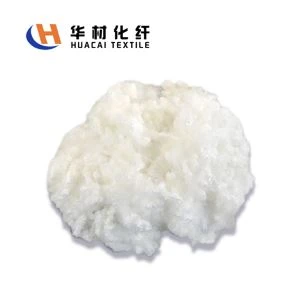
As someone who’s been supplying nylon staple fiber to textile manufacturers, upholstery brands, and industrial goods teams for over 12 years, I’ve fielded this question a hundred times: Why do two products made with nylon from different mills feel so different when it comes to holding up to repeated stress? The answer boils down to fatigue properties—specifically how nylon staple fiber’s molecular structure, production process, and intended use shape its ability to resist breaking or deforming after thousands of small, stress cycles. Let’s break this down like I’d walk a new client through it, no overly dense jargon, just real-world explanations of what makes nylon staple fiber stand out, and where it can fall short if you’re not choosing the right grade.
First, let’s get clear on what we mean by fatigue, because it’s not just “getting tired” like a person. For synthetic fibers, fatigue is the gradual damage that builds up when the material is stretched, bent, twisted, or compressed over and over again—even if each individual stress is small enough that it wouldn’t break the fiber in one go. Think of bending a paperclip back and forth: at first it’s flexible, then after 10 or 15 bends it snaps in two. That’s fatigue, and nylon staple fiber behaves the same way, just on a far smaller, more consistent scale.
Unlike filament nylon, which is used for things like parachute cord or woven industrial webbing, nylon staple fiber is cut into short, 38mm to 100mm lengths (depending on the product’s needs) before being spun into yarn. That staple structure is a huge part of its fatigue profile. When you spin staple into yarn, the individual fibers tangle and lock together, creating a more flexible, soft yarn that’s perfect for apparel, upholstery, and heavy-duty carpet tufting—something filament nylon, which is more rigid, can’t replicate as easily. But that same staple structure also means the fatigue performance depends on how well those individual fibers hold up and how tightly they’re spun together.
The core of nylon’s fatigue strength comes down to its molecular makeup. Nylon is a polyamide polymer, which means it has long, repeating molecular chains that can slide past each other when stretched, then snap back into place when the stress is removed. That’s what makes nylon so elastic compared to, say, polyester, which has stiffer molecular chains that don’t slide as well. But here’s the catch: those molecular chains can only slide so many times before they start to break down. That’s where fatigue starts. For example, a standard 6.6 grade nylon staple fiber (the most common type we supply) can handle roughly 10,000 to 50,000 cycles of repeated stretching before it starts to show visible damage, while a high-tenacity nylon staple can handle up to 100,000 or more, depending on how it’s processed.
Wait—let’s put that number in real terms, because 10,000 cycles sounds abstract. If you have a pair of work pants made with our standard nylon staple yarn, every time you bend your knee to climb a ladder, that’s a stretch cycle. If you climb a ladder 10 times a day, that’s 20 cycles (10 for each knee). So 10,000 cycles is 500 days of daily climbing—over a year and a half. That’s why my company’s clients who supply workwear rarely get complaints about seam or fabric failure before a full year of use, as long as they’re using the right staple grade.
But fatigue properties aren’t just about how many cycles a fiber can take. They’re also about how the fiber fails. Most synthetic fibers either fail suddenly (a complete snap without warning) or degrade slowly over time. Nylon staple fiber does both, but it leans toward the slow degradation side—at least for most grades. When a nylon staple starts to fatigue, you’ll first see tiny micro-cracks on the fiber’s surface, then small breaks within the individual staple fibers, and eventually, those breaks cause the yarn to thin and fray. That slow failure is actually a good thing for end users, because it gives them a heads-up that the product is wearing out, rather than snapping mid-action (like a work boot sole breaking while you’re on a construction site).
Of course, not all nylon staple fiber is created equal. The biggest factor in fatigue performance is the production process, specifically how the fiber is drawn and heat-set. Drawing is the step where the molten nylon is pulled to stretch the molecular chains, aligning them along the length of the fiber. The more you draw it, the stronger the chains, and the more cycles the fiber can handle. Heat-setting is the step where the fiber is heated to lock in that stretched, aligned structure—if you skip or cut corners on heat-setting, the molecular chains will relax over time, reducing fatigue resistance.
I’ve seen this first-hand with a client who switched to a cheaper nylon staple supplier a few years back to cut costs. Their upholstery fabric started failing after just 6 months, compared to the 2 to 3 years they got from our product. When we tested the cheap staple, we found the heat-setting step was done at too low a temperature, so the fibers’ molecular chains weren’t properly locked in. After just a few thousand cycles of being sat on, leaned against, and pulled (all small, repeated stresses), the chains slipped apart, and the fibers broke. That’s why when we supply nylon staple, we test every batch’s fatigue performance using a standard lab method: we mount the fiber in a tensile tester that repeats a set stretch and release cycle, track how much force the fiber can handle over time, and only release batches that meet our minimum threshold for their intended use.
Another factor that impacts fatigue properties is moisture content. Nylon is hygroscopic, meaning it absorbs water from the air. That might sound like a bad thing, but it actually affects fatigue in two ways. First, when nylon absorbs moisture, the molecular chains become more flexible, which makes the fiber more resistant to low-cycle, high-stress fatigue. That’s why a work boot that’s been worn in the rain (soaked with water) is less likely to snap on a single sharp bend than a dry boot. But on the flip side, high levels of moisture can cause long-term fatigue if the fiber is repeatedly wetted and dried—think a gym towel that gets washed and dried every day. The cycle of absorbing water and releasing it over time breaks down the molecular chains, leading to faster fraying. That’s why for products that will be exposed to frequent wet-dry cycles (like swimwear or outdoor upholstery), we recommend a specially treated nylon staple that has a moisture-resistant coating to reduce this breakdown.
Tensile modulus, another key property, also plays into fatigue performance. Tensile modulus is a measure of how stiff a fiber is—high modulus fibers are stiff, low modulus are flexible. For applications that need to handle high, repeated stress (like heavy-duty carpet for shopping malls or tractor seat upholstery), we supply high-modulus nylon staple fiber, which is stiffer, can handle more force per cycle, and resists fatigue far better than low-modulus fiber. For soft goods like tights or casual apparel, low-modulus nylon staple is better, since it’s more comfortable to wear, even if it has slightly lower fatigue resistance. You wouldn’t want a pair of leggings that’s stiff enough to be uncomfortable, even if it lasts 10 years.
I often get asked if nylon staple fiber has any limits when it comes to fatigue. The short answer is yes—every material does. If you subject nylon staple to stress that’s near its maximum tensile strength, it will fail suddenly, no matter how good the grade. That’s why it’s critical to match the fiber’s fatigue properties to the product’s intended use. For example, a cargo net made with low-tenacity nylon staple will break under heavy load, because it’s not designed for that level of repeated stress. But a cargo net made with high-tenacity, heat-set nylon staple will last for years, even with constant use loading and unloading crates.
Another common question: How does nylon staple fiber compare to other synthetic fibers when it comes to fatigue? Polyester is the main competitor, but polyester has much stiffer molecular chains, so it has better resistance to high-temperature fatigue, but worse resistance to low-temperature flex fatigue. That means nylon staple is better for products used in cold environments—like work gloves for outdoor construction in winter—because it can bend and flex at low temperatures without the molecular chains becoming brittle and breaking. Polyester would be stiff and prone to cracking in the cold, which is why many industrial outdoor products switch to nylon staple for cold climates.
What about natural fibers, like cotton? Cotton has very poor fatigue resistance compared to nylon staple. A cotton work shirt will start to fray at the seams after a few months of weekly washing and wearing, because each wash is a cycle of stretching and bending that breaks the cotton fibers. Nylon staple, on the other hand, can handle hundreds of wash cycles before showing signs of fatigue, which is why it’s such a popular blend with cotton for workwear and casual apparel.
As a supplier, my job isn’t just to sell nylon staple fiber—it’s to help our clients pick the right grade for their specific application. For example, if a client is making heavy-duty carpet for a school hallway, I’ll recommend our high-tenacity, heat-set nylon staple with a high modulus, since that carpet will be subjected to thousands of foot traffic cycles a day. If a client is making a soft baby blanket, I’ll recommend our low-modulus, easy-dyeing nylon staple with balanced fatigue properties, since the blanket needs to be soft against a baby’s skin but still hold up to weekly washes.
I also work closely with our R&D team to test new grades of nylon staple that push fatigue properties even further. Last year, we launched a modified nylon 6 staple fiber that has 30% higher fatigue resistance than our standard 6.6 grade, which is perfect for outdoor furniture and marine upholstery—products that are exposed to sun, salt water, and constant flex from being sat on or stretched when the wind blows. We tested this new grade in a lab for 100,000 flex cycles, and it only lost 8% of its tensile strength, compared to 18% for our standard grade. That’s a huge difference for a product that needs to last 5 to 10 years outdoors.
One thing I always emphasize to new clients is that fatigue properties aren’t something you can see in a spool of nylon staple fiber. You have to test it, or trust a supplier that does the testing for you. A spool of nylon might look identical to another, but if one was heat-set at the right temperature and the other wasn’t, their fatigue performance could be worlds apart. That’s why we provide our clients with full test reports for every batch of nylon staple we supply, so they know exactly what they’re getting, and can trust that it will meet their product’s durability needs.
At the end of the day, nylon staple fiber’s fatigue properties are what make it such a versatile material. It’s strong enough for industrial uses, soft enough for apparel, durable enough for everyday products, and adaptable enough to be modified for specific needs. But it’s not a one-size-fits-all solution, and understanding its fatigue characteristics is key to choosing the right grade for your product.

If you’re working on a new project—whether it’s workwear, upholstery, industrial goods, or something else—and you’re looking for nylon staple fiber that has the exact fatigue properties you need for durability and performance, I’d be happy to walk you through our product lines, share test data, and help you find the right grade for your application. Let’s connect to talk through your needs and find the perfect solution for your next product.
Polyester Tow References:
- Textile Properties of Fibers, Yarns, and Fabrics; Morton, W.E., Hearle, J.W.S.; Butterworth-Heinemann, 2008.
- Fatigue Behavior of Synthetic Fibers and Their Blends; Patel, H.C.; Journal of Industrial Textiles, 2015, Vol. 45, Issue 3, pp. 521-540.
- Nylon Fibers: Structure, Processing, and Applications; Black, J.M.; CRC Press, 2020.
- Hygrothermal Effects on Fatigue Performance of Polyamide Fibers; Lee, S., Park, J.; Fibers and Polymers, 2018, Vol. 19, Issue 7, pp. 1452-1459.
Huacai Group
Huacai Group is well-known as one of the leading nylon staple fiber manufacturers and suppliers in China, featured by quality products and good service. Please feel free to buy bulk nylon staple fiber at competitive price from our factory.
Address: No.188 Zhenyang Road, Qingyang Town, Jiangyin City, Jiangsu Province, China
E-mail: sales@huacaifiber.com
WebSite: https://www.huacaifiber.com/
