If you’ve ever stood in a muddy field at 5 a.m. watching a combine harvester stall mid-harvest, you know how quickly a small, broken spare part can turn a promising crop season into a nightmare. As a third-generation agriculture machinery spare parts supplier, I’ve spent the last two decades on the front lines of this industry, fielding frantic calls from farmers, independent repair technicians, and large agribusiness operations all asking the same question: “Why is it so hard to get the right part, at the right price, when I need it?” The challenges facing our sector aren’t just logistical headaches—they’re deeply rooted in global supply chain shifts, evolving machine technology, and the unique urgency of farming, where timing isn’t just a business detail, it’s a matter of feeding communities. Agriculture Machinery Spare Parts

Let’s start with the most immediate, universal challenge: supply chain volatility that shows no sign of stabilizing. Back in the 1990s, when my father launched our small parts shop out of a converted garage, we sourced most parts from three regional manufacturers in the U.S. and Europe. Lead times were 7 to 10 days, inventory was manageable, and a broken bearing or hydraulic seal could be picked up from our shelf before the end of the week. That world is long gone. The 2020 global pandemic exposed gaps in just-in-time manufacturing models, as factory shutdowns in Southeast Asia (where 60% of small and mid-sized agriculture machinery parts are now produced) halted production for months. Then, as the world reopened, demand spiked: farmers, who had deferred repairs during lockdowns, rushed to fix equipment ahead of the 2021 planting season, creating a perfect storm of delayed shipments and depleted stock.
Even now, post-pandemic, we’re not out of the woods. Tariffs on imported steel and aluminum, a critical raw material for parts like plow points, axle shafts, and hydraulic cylinders, have driven up input costs by 18% since 2022. Shipping container costs, which dropped from a peak of $10,000 per 40-foot container in 2021 to around $1,500 in 2024, are still 300% higher than pre-2020 levels when adjusted for inflation. Last year, we had a farmer in Iowa waiting 42 days for a set of replacement cultivator tines—parts we’d ordered from a factory in Vietnam, only for a port strike in Los Angeles to delay unloading. For that farmer, who needed those tines to plant 1,200 acres of corn before the May rains, that wait meant working around the clock with borrowed equipment and a team of part-time laborers to get the field tilled on time. This isn’t an anomaly; a 2023 survey from the National Agri-Marketing Association found that 78% of independent farmers experienced part lead times 2 to 3 times longer than pre-pandemic averages, with 12% waiting more than 60 days for critical parts.
Next, there’s the growing complexity of modern agriculture machinery that’s outpacing the spare parts ecosystem. Today’s combine harvesters, tractors, and planters aren’t just mechanical machines—they’re rolling computers, loaded with sensors, GPS modules, and telematics systems that monitor everything from soil moisture to seed spacing. A few years ago, replacing a broken hydraulic hose on a John Deere tractor was a simple job; now, that same hose is integrated with the tractor’s digital control unit, and the replacement part is tied to a proprietary code that only the original equipment manufacturer (OEM) can program. What that means for suppliers like us is that we can’t just source a cheap, generic hose from a third-party factory anymore—we need parts that are OEM-compatible, or we risk the part triggering a fault code that shuts down the entire machine, even if the physical component works.
This “proprietary lock” is a contentious issue in our industry, and it’s leaving both suppliers and farmers stuck. OEMs argue that closed systems ensure machine safety and performance, and they’re protecting their intellectual property. But for independent suppliers, that means investing in specialized engineering teams, testing facilities, and software to reverse-engineer or license compatibility for new parts. We spent $250,000 last year developing a line of aftermarket planter seed sensors that work with Case IH equipment, only to see the OEM release a modified control module in early 2024 that made our existing sensors obsolete. Now we’re back at the drawing board, another six-figure investment on the line. For farmers, this means two choices: pay the OEM’s 30% to 50% markup for a “genuine” part, or risk invalidating their machine’s warranty if they use an aftermarket option. A 2022 report from the American Farm Bureau Federation found that OEM parts cost on average 45% more than comparable aftermarket parts, with lead times 2 weeks longer, a gap that’s only widened as OEMs prioritize in-house sales over third-party distributors.
Then there’s the issue of inventory management, which is uniquely challenging because of agriculture’s seasonal cycles. Farming isn’t a 12-month-a-year uniform operation; it’s tied to planting and harvest windows that vary by region, commodity prices, and weather patterns. A parts inventory manager has to anticipate demand 6 to 12 months in advance: if we overstock a part for the Midwest corn harvest, we could be left holding obsolete stock by the time the next season rolls around; if we understock, we lose a customer and risk them going to a competitor.
This year, for example, soybean farmers in the Upper Mississippi Valley faced a record late harvest due to heavy rains in October, which meant they needed extra parts for drying equipment and storage conveyors that they’d originally planned to use for corn. We had anticipated 20% higher corn harvest demand, so we stocked up on those parts, but only had 15% of the conveyor rollers we needed for soybeans. By the time we re-ran a rush order, the harvest was delayed another two weeks, and three local co-ops lost out on processing contracts because their equipment was down. It’s a balance that keeps me up at night: how do we forecast demand for parts that are tied to a season that can shift dramatically due to climate change? Extreme weather events—droughts, floods, early frost—are becoming more frequent, and they’re disrupting seasonal demand patterns in ways we’ve never had to account for before.
Another hidden challenge is the skill gap in the parts and repair sector. When my father started our business, most repairs were mechanical; a farmer could diagnose a broken part by sight, order it from a local supplier, and install it themselves. Today, even minor issues often require specialized training to work with digital systems, and many young farmers are less experienced with basic mechanical repair, relying instead on contractors. That means parts have to be not only available, but also accompanied by detailed, up-to-date documentation for technicians, something that smaller suppliers often can’t afford to provide. Last year, we had a 22-year-old farmer in Kansas who’d never replaced a telematics module before, and the instruction sheet that came with the OEM part was written in technical jargon that left him stuck. We tried to troubleshoot over the phone, but without a visual guide, it took three days to get his tractor back online—three days that cost him 100 acres of planted wheat. This gap isn’t just about parts availability; it’s about ensuring that the parts we supply are accessible and usable for the people who need them, a challenge that our industry is only just starting to address.
To be clear, these challenges aren’t insurmountable. Over the past two years, our team has invested in a digital inventory system that uses weather data and past harvest records to forecast demand more accurately, and we’ve partnered with three specialized engineering firms to develop OEM-compatible parts that work with the latest machine models without proprietary lock-in. We’ve also started hosting free workshops for local farmers and technicians, teaching basic digital system troubleshooting and how to diagnose common part issues, which has cut down on the number of returns and helped us build stronger relationships in the community.
But we can’t solve these challenges alone. For farmers, that means being willing to explore reliable aftermarket suppliers instead of defaulting to OEM parts, and for OEMs, it means opening up their proprietary systems to third-party suppliers to create more competition and shorter lead times. For suppliers like us, it means continuing to invest in our team, our inventory, and our partners to stay agile in an industry that’s always changing.
If you’re a farmer, repair technician, or agribusiness operations manager struggling with parts delays, high costs, or hard-to-source components, we’d love to hear from you. Our team has over 20 years of experience working with all major agriculture machinery brands, and we specialize in getting you the parts you need, when you need them, with transparent pricing and support every step of the way. Let’s connect to discuss how we can support your operation this season and beyond.
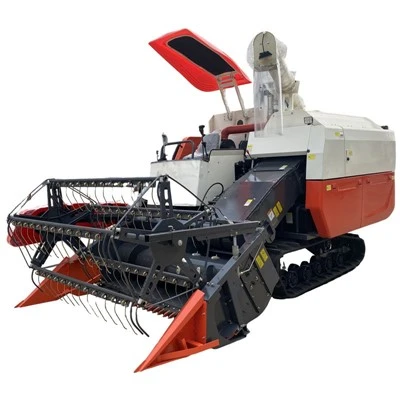
Rice Combine Harvester References
National Agri-Marketing Association. (2023). 2023 Agriculture Spare Parts Industry Report.
American Farm Bureau Federation. (2022). Aftermarket vs. OEM Parts: Cost and Performance Comparisons.
Agriculture and Agri-Food Canada. (2024). Global Supply Chain Shifts and Agriculture Machinery Parts.
Huzhou Liangyi Agro Machinery Co., Ltd.
As one of the most professional agriculture machinery spare parts manufacturers and suppliers in China, we have world-leading production equipment and strong manufacturing capabilities. Please rest assured to wholesale advanced agriculture machinery spare parts from our factory. Contact us for more cheap products.
Address: High-Tech Industrial Zone, Huzhou City, Zhejiang Province, China
E-mail: Liangyi_agro@126.Com
WebSite: https://www.cnliangyi-agro.com/
