In the ever – evolving landscape of the renewable energy sector, photovoltaic switches play a critical role in ensuring the efficient and safe operation of solar power systems. As a prominent supplier of photovoltaic switches, I am frequently asked about how these switches communicate with a central control unit. This blog post aims to shed light on this technical but crucial aspect. Photovoltaic Switch
The Basics of Photovoltaic Switches and Central Control Units
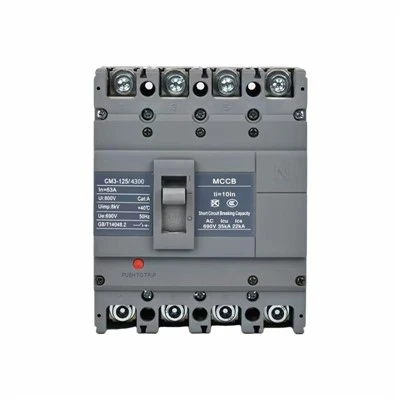
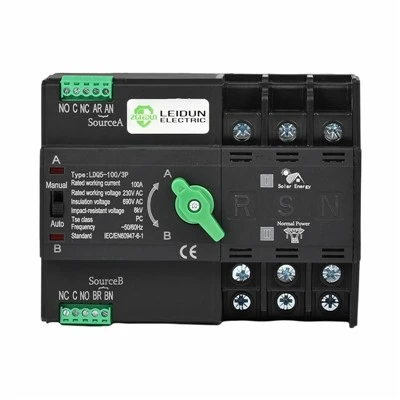
Before delving into the communication mechanisms, it is essential to understand the functions of photovoltaic switches and central control units. A photovoltaic switch is a device designed to manage the electrical current flow in a solar panel system. It can isolate solar panels from the rest of the system, either for maintenance purposes, safety reasons, or to optimize the system’s performance. On the other hand, a central control unit acts as the brain of the entire solar power installation. It monitors various parameters such as power output, temperature, and the status of individual components, and makes decisions to ensure the system operates at its peak efficiency.
Communication Protocols
Modbus Protocol
One of the most widely used communication protocols for connecting photovoltaic switches to a central control unit is the Modbus protocol. Modbus is an open – standard communication protocol that allows different devices to communicate over a serial line or Ethernet network. In the context of photovoltaic switches, the Modbus protocol enables the central control unit to read data from the switches, such as the current status (open or closed), and to send control commands to them.
For example, if the central control unit detects an abnormal temperature rise in a particular string of solar panels, it can send a command via the Modbus protocol to the corresponding photovoltaic switch to isolate that string. Similarly, the switch can continuously transmit its status data back to the central control unit, allowing for real – time monitoring and decision – making.
The advantage of using the Modbus protocol is its simplicity and widespread compatibility. It is easy to implement in both new and existing solar power systems, and there are numerous off – the – shelf devices that support this protocol, reducing the integration cost and complexity.
CAN Protocol
The Controller Area Network (CAN) protocol is another option for communication between photovoltaic switches and the central control unit. CAN is a serial communication protocol that was originally developed for the automotive industry but has found its way into various industrial applications, including solar power systems.
CAN offers high – speed data transfer and excellent noise immunity. In a solar power system, multiple photovoltaic switches can be connected to the central control unit via a CAN bus. The central control unit can then communicate with all the switches simultaneously, polling for data and sending control signals.
CAN is particularly suitable for large – scale solar power installations where a large number of switches need to be managed. Its ability to handle high – volume data traffic efficiently makes it ideal for systems that require real – time monitoring and control of multiple components.
Wireless Communication Options
Wi – Fi
Wi – Fi technology provides a convenient way for photovoltaic switches to communicate with the central control unit, especially in smaller solar power installations. Wi – Fi – enabled photovoltaic switches can connect to a local wireless network, which is then connected to the central control unit.
The advantage of using Wi – Fi is its ease of integration. Most modern central control units are equipped with Wi – Fi capabilities, and users can easily configure the connection between the switches and the control unit using a smartphone or a computer. Additionally, Wi – Fi allows for remote access, meaning that system operators can monitor and control the photovoltaic switches from anywhere with an internet connection.
However, Wi – Fi has its limitations. The range of Wi – Fi signals is relatively limited, and interference can be a problem in areas with a high density of wireless devices. Therefore, it may not be suitable for large – scale solar farms.
ZigBee
ZigBee is a low – power, wireless communication protocol designed for wireless sensor networks. In the context of photovoltaic switches, ZigBee can be used to create a mesh network where multiple switches can communicate with each other and with the central control unit.
ZigBee offers several advantages. It has a low power consumption, which is crucial for photovoltaic switches that are often powered by the solar panels themselves. The mesh network topology allows for reliable communication even in areas where direct line – of – sight between devices is not possible. Moreover, ZigBee networks can support a large number of devices, making it suitable for medium – to large – scale solar power systems.
Power – Line Communication (PLC)
Power – line communication is a technology that uses the existing electrical power lines to transmit data. In a solar power system, the photovoltaic switches can communicate with the central control unit through the power lines that connect the solar panels to the inverter and the grid.
One of the main advantages of PLC is that it does not require additional wiring. This reduces the installation cost and complexity, especially in retrofit projects. However, PLC can be affected by electrical noise on the power lines, which can degrade the quality of the communication. To overcome this issue, advanced modulation techniques and signal processing algorithms are often used.
Challenges in Communication
Environmental Factors
Solar power systems are often installed in harsh environments, such as deserts or on rooftops exposed to extreme weather conditions. These environmental factors can have a significant impact on the communication between photovoltaic switches and the central control unit. For example, high temperatures can affect the performance of electronic components, and dust or moisture can damage communication interfaces.
Signal Interference
In addition to environmental factors, signal interference can also pose a challenge. Electrical equipment in the vicinity of the solar power system, such as motors or transformers, can generate electromagnetic interference that disrupts the communication signals. To mitigate this problem, proper shielding and filtering techniques need to be employed.
Compatibility Issues
With so many different communication protocols and technologies available, compatibility issues can arise when integrating photovoltaic switches with a central control unit. It is essential to ensure that the switches and the control unit support the same communication protocol or that appropriate conversion devices are used to bridge the gap.
The Future of Communication in Photovoltaic Systems
As the renewable energy sector continues to grow, the demand for more advanced communication technologies in photovoltaic systems is increasing. The development of the Internet of Things (IoT) is likely to have a significant impact on the way photovoltaic switches communicate with central control units. IoT – enabled switches can collect and transmit a vast amount of data, allowing for more accurate monitoring and predictive maintenance.
Artificial intelligence and machine learning algorithms can be applied to the data collected from the switches to optimize the performance of the solar power system further. For example, these algorithms can predict when a switch is likely to fail and schedule maintenance in advance, reducing downtime and improving the overall efficiency of the system.
Conclusion and Call to Action
In conclusion, the communication between photovoltaic switches and central control units is a complex but essential aspect of solar power systems. Different communication protocols and technologies, such as Modbus, CAN, Wi – Fi, ZigBee, and PLC, offer various advantages and can be selected based on the specific requirements of the system.
Instrument Transformer As a leading supplier of photovoltaic switches, we are committed to providing high – quality products that support multiple communication options. Our switches are designed to meet the highest industry standards and are reliable even in the most challenging environments. If you are in the market for photovoltaic switches or need more information about their communication capabilities, we invite you to contact us for a procurement discussion. We look forward to working with you to build more efficient and sustainable solar power systems.
References
- Mohan, N., Undeland, T. M., & Robbins, W. P. (2012). Power Electronics: Converters, Applications, and Design. Wiley.
- Dorf, R. C., & Bishop, R. H. (2016). Modern Control Systems. Pearson.
- IEEE Standards Association. (2015). IEEE Standard for Industrial – Telecommunications – Networked Control Systems.
Zhejiang Leidun Electric Co., Ltd.
As one of the most experienced photovoltaic switch manufacturers and suppliers in China, we also support customized service and OEM service. Please feel free to wholesale high quality photovoltaic switch made in China here from our factory. Thank you for your interest in our products.
Address: No.337, Liule Road, Liushi Town, Yueqing City, Wenzhou City, Zhejiang Province, China
E-mail: Sales@zgleidun.com
WebSite: https://www.leidunelectric.com/
