Hey there! As an industrial endoscope supplier, I’ve seen firsthand how these nifty tools are revolutionized by their accessories. You might be wondering, what’s the big deal about these add – ons? Well, let me break it down for you. Industrial Endoscope

1. Lighting Accessories: Shining a Light on Hidden Areas
One of the most crucial accessories for an industrial endoscope is the lighting system. You see, when you’re trying to inspect the insides of a machine, a pipe, or any hard – to – reach place, good lighting is everything.
There are different types of lighting options available. LED lights are super popular these days. They’re energy – efficient, which is great because you don’t want to keep changing batteries all the time. Plus, they last a long time. LED lights can provide a bright, white light that really helps you see details clearly. Whether it’s a small crack on the inside of a metal tube or some corrosion in an engine part, the right lighting can make it pop out.
Some endoscopes come with adjustable lighting. You can turn the brightness up or down depending on how dark the area is. For example, if you’re looking into a deep, narrow pipe, you might need maximum brightness. But if you’re inspecting something that’s got a bit of natural light coming in, you can tone it down. This flexibility is really handy, especially when you’re doing a variety of inspections.
2. Camera Lenses: The Eyes of the Endoscope
The camera lens on an industrial endoscope is like your own eyes, but on steroids. It’s what captures the images and videos that you’ll be analyzing.
Different lenses offer different fields of view. A wide – angle lens is great for getting an overall look at a large area. Let’s say you’re checking the inside of a big storage tank. A wide – angle lens can show you a lot of the tank’s interior in one shot, so you can quickly identify any major issues like leaks or sediment buildup.
On the other hand, a telephoto lens is useful when you need to focus on a small, specific area. Maybe there’s a tiny part in a complex machine that you suspect is damaged. A telephoto lens can zoom in on it and give you a clear picture of what’s going on.
The quality of the lens also matters a lot. High – resolution lenses can capture sharp, detailed images. This is essential when you’re looking for small defects or micro – cracks. With a good lens, you won’t miss those subtle signs that could indicate a bigger problem down the line.
3. Probes and Extensions: Reaching the Unreachable
Industrial endoscopes often come with different probes and extensions. These are what allow you to get into those tight, hard – to – access places.
Probes come in different shapes and sizes. For instance, a rigid probe is great for straight – line inspections. If you’re checking the inside of a long, straight pipe, a rigid probe can easily travel through it. Rigid probes are also pretty sturdy, so they can handle some rough treatment.
Flexible probes, on the other hand, are the go – to when you need to navigate around curves and bends. You might be trying to inspect the inside of a complex engine with lots of hoses and channels. A flexible probe can snake its way through all those twists and turns to reach the area you want to check.
Extensions are also really useful. They allow you to increase the length of your probe, so you can reach deeper into a structure. For example, if you’re looking into a deep well or a long duct, adding an extension to your probe can help you get a clear view of what’s going on at the far end.
4. Display Units: Seeing is Believing
The display unit is where you get to see all the images and videos captured by the endoscope. It’s basically your window into the hidden world.
There are different types of display units available. Some endoscopes come with built – in displays, which are really convenient. You can just hold the endoscope and see the results right there. These built – in displays are often small and lightweight, so they’re easy to carry around.
External display units are another option. They can be larger and offer a higher resolution. If you’re working in a team or need to present your findings to others, an external display is a great choice. You can connect the endoscope to a big screen, and everyone can see the images clearly.
Some display units also have additional features. For example, they might allow you to zoom in and out on the images, take screenshots, or record videos. These features can be really helpful when you’re analyzing the data and documenting your findings.
5. Storage Solutions: Keeping Your Data Safe
Once you’ve captured all those important images and videos, you need a way to store them. That’s where storage accessories come in.
Many industrial endoscopes are compatible with memory cards. You can insert a memory card into the endoscope or the display unit, and it will store all your data. Memory cards come in different capacities, so you can choose one that suits your needs. If you’re doing a lot of inspections and need to store a large amount of data, a high – capacity memory card is a must.
Some endoscopes also offer cloud storage options. This is really convenient because you can access your data from anywhere with an internet connection. You don’t have to worry about losing your memory card or having it get damaged. Cloud storage also provides an extra layer of security for your important inspection data.
6. Software for Analysis: Making Sense of the Data
Software is a game – changer when it comes to using industrial endoscopes. It can help you analyze the images and videos you’ve captured in a more detailed way.
Some software allows you to measure distances and dimensions in the images. For example, if you’re inspecting a pipe and you want to know the width of a crack, the software can give you an accurate measurement. This is really useful for assessing the severity of a defect.
There’s also software that can detect patterns and anomalies. If there’s a recurring problem in a particular type of machine, the software can flag it for you. It can save you a lot of time and help you make more informed decisions about maintenance and repairs.
In conclusion, the different accessories of an industrial endoscope play a vital role in making these tools as effective as they are. Each accessory has its own unique function, and together, they allow you to perform thorough inspections in a wide variety of industrial settings.
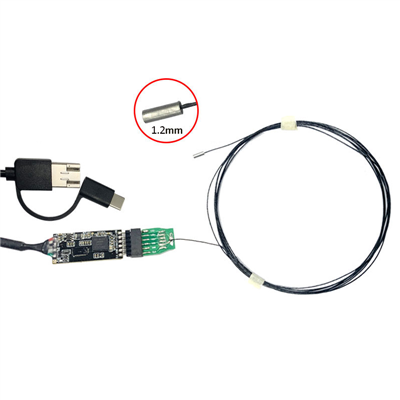
If you’re in the market for an industrial endoscope or its accessories, I’d love to talk to you. We’ve got a great range of products that can meet your specific needs. Whether you’re a small – scale maintenance team or a large industrial company, we’ve got the solutions for you. Drop me a line to start a conversation about your requirements and how we can help you get the most out of your inspections.
USB Inspection Camera References
- Industrial Endoscope User Manuals
- Industry Reports on Inspection Technologies
Shenzhen EZON Electronics Co., Ltd.
Shenzhen EZON Electronics Co., Ltd. is well-known as one of the leading industrial endoscope manufacturers and suppliers in China. Please feel free to buy customized industrial endoscope at competitive price from our factory. Good service and quality products are available.
Address: 3A-7, Building B, Qianwan Hard Technology Industrial Park, Xixiang Street, Bao’an District, Shenzhen
E-mail: sales@ezon-endosope.com
WebSite: https://www.ezon-endosope.com/
