Hey guys, let’s cut to the chase – if you’ve ever stood in a lab, coffee in one hand, fumbling with tiny vials of samples that are barely visible, and stared at a box of Pasteur pipettes like, “wait, can these actually handle small volumes?” then you’re in the right spot. I’m not some stuffy textbook author – I’m the person behind the counter at a Pasteur pipette supplier (you know, the one who’s seen way too many undergrads panic about pipetting 50 microliters and way too many senior researchers swear by cheap disposable glass ones) and I’ve fielded this exact question a hundred times. So let’s talk real, no fluff: can a Pasteur pipette transfer small volumes? Pasteur Pipette

First off, let’s get one thing straight – I’m not gonna pretend these are like your fancy digital pipettes that measure to the nanoliter. Those are for when you need pinpoint accuracy for ELISA assays or next-gen sequencing libraries. But here’s the tea: “small volumes” isn’t a one-size-fits-all term. If we’re talking 100 microliters up to like 1 milliliter? A Pasteur pipette can absolutely pull that off. Even as low as 50 microliters, if you’re careful. I’ve watched a grad student of mine nail a 75 microliter transfer for a protein assay with a disposable plastic Pasteur pipette yesterday – no fancy gear, just good technique.
Wait, but let’s stop and define what we’re working with here. There are two main types of Pasteur pipettes, right? The old-school glass ones that you have to fire-polish the tips of (if you know, you know – it’s the tiny skill that separates lab newbies from the people who don’t spill samples on their brand new gloves) and the disposable plastic ones we supply – polypropylene, super light, flexible tips that work way better for routine stuff. Glass ones usually have a gradation line (or two) marked on the stem, right? Most go up to 1mL, with a small tick around 100 microliters. Plastic ones too, though sometimes the markings are a little faint because they’re mass-produced, but they’re consistent enough for most day-to-day work.
The biggest mistake people make when trying to transfer small volumes with these? Squeezing the bulb too hard. That’s how you get a mess – either too much liquid, or air bubbles, or the whole thing slips out of your hand. When you’re going for, say, 200 microliters, you barely need to nudge the rubber bulb. I tell all my regular customers: practice with empty pipettes first. Squeeze the bulb just enough to make a tiny dent, not a full squeeze. Then dip the tip 1-2 millimeters below the surface of your sample (don’t jam it all the way to the bottom – you’ll suck up gunk) and slowly release the pressure. If you do that right, you’ll get a smooth, bubble-free pull right to the line you need. For even smaller volumes, like 50 microliters, you can use the space between two grad lines – just estimate the gap, move slowly, and if you go over a little, you can push a drop back out by gently pressing the bulb.
But let’s be real – Pasteur pipettes aren’t for every small volume job. If you need less than 50 microliters? Yeah, that’s pushing it. Those tiny volumes are where your single-channel micropipettes shine, no contest. And if you need accuracy down to the microliter, like for qPCR setup? Don’t even bother with a Pasteur – that’s what the fancy gear is for. But for routine transfers, when you’re not dealing with million-dollar experiments that will fall apart over a 10 microliter mistake? Pasteur pipettes work like a charm. I’ve seen researchers use them for everything from adding reagents to bacterial cultures (1mL aliquots, no problem) to spotting thin-layer chromatography plates (200 microliters, precise enough for separation) even for small volume media changes for cell cultures, as long as you’re gentle.
Now, I know what some of you are thinking: “But they’re disposable, so what about waste?” Hey, I get it – sustainability’s huge now. But let’s compare: a box of 1000 plastic Pasteur pipettes costs a fraction of what you’d spend on a box of disposable micropipette tips for the same volume range. And if you’re reusing glass ones? As long as you clean them properly (soap, ethanol, autoclave, right? Don’t just wipe them off with a Kimwipe) they work for months. I’ve had a researcher come back to me last month saying their set of fire-polished glass Pasteurs have been in use for 6 months, only replacing them because the tips got chipped, not because of accuracy issues.
Wait, let’s talk about the downsides, because I’m not here to sell you something that’s not right for you. First, accuracy – like I said before, these are not calibrated to the NIST standards or whatever for your super sensitive assays. The grad lines are rough estimates. If you measure them with a scale, the actual volume can vary by like 10-15 microliters per pipette, especially the cheaper ones. Second, they can’t do sequential transfers super easily – if you need 5 aliquots of 100 microliters each, a micropipette is way faster, because you don’t have to refill the Pasteur every time. Third, plastic ones can leach chemicals if you’re working with organic solvents or certain buffers, which is why glass is still better for some applications.
But here’s the thing: most labs don’t just do super sensitive, high-stakes experiments 100% of the time. There’s all the busywork – adding water to slides for staining, transferring stock solutions, aliquoting for student projects, cleaning up bench spills. That’s where Pasteur pipettes shine. I’ve had a high school science teacher tell me that their lab’s budget is so tight, they use nothing but Pasteur pipettes for all their student work, and their students haven’t ruined a single experiment because of bad pipetting technique. A biotech startup I supply only uses micropipettes for their key assays, and uses Pasteurs for everything else, saving them thousands a month on supplies.
Oh, and let’s not forget the little guys – the micro Pasteur pipettes! Wait, have you seen those? They’re super tiny, like 1mL max volume, tips that are even narrower, made for working with really small samples, like in PCR tubes or 96-well plate wells. I had a customer last week use them to transfer 50 microliters of a DNA library into a sequencing plate, and said it was just as good as their micropipette for that step. The only difference? They cost half as much, and they’re disposable so no cleaning.
I should also mention technique, because that’s 90% of why people mess up. If you’re squeezing too hard, you’ll get air bubbles, which throw off your volume. If you’re dipping the tip too deep, you’ll pick up particulates that clog the tip, making it hard to control the flow. If you’re releasing the bulb too fast, you’ll get a sudden rush of liquid past the line. Take it slow, practice a few times with water before your actual sample, and you’ll get the hang of it. Pro tip: if you’re having trouble holding the bulb steady, you can use a clip or a small stand to prop it up, so your hands don’t shake while you’re transferring.
Wait, let’s address the elephant in the room: can you use them for volatile liquids? Like ethanol or acetone? Yeah, but glass is better here, because plastic ones can sometimes absorb or let volatile solvents evaporate faster through the plastic. For aqueous solutions, though, plastic is totally fine, and way less breakable than glass. I tell people if you’re working with toxic or corrosive liquids, get glass Pasteurs – disposable plastic might not hold up, and you don’t want to end up with a leaky pipette in your lab coat pocket. If it’s just regular buffers, plastic is perfect.
So let’s wrap this up, no beating around the bush. Can a Pasteur pipette be used for transferring small volumes? Yes – but only for the right small volumes, and for the right jobs. If you need <50 microliters or ultimate accuracy for high-stakes experiments, stick to micropipettes. If you need 50 to 1000 microliters, for routine work, student projects, low-stakes assays, or just busy lab work? A Pasteur pipette is not only fine, it’s actually a better, cheaper, more efficient option. I’ve seen so many labs waste money on fancy gear they don’t need, when a simple Pasteur pipette would get the job done just as well, no headaches, no extra cost.
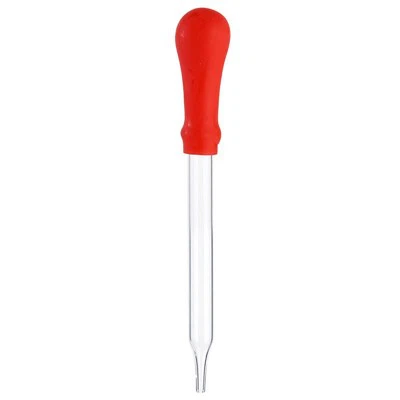
And hey, before you go – if you’re curious about what kind of Pasteur pipettes work best for your lab, or you need to stock up, just reach out. I’ve worked with everyone from high school science classes to big pharma labs, so I can help you pick the right ones for what you’re doing, no sales pitch, just straight-up advice. Don’t overcomplicate it – sometimes the simplest tools are the best ones.
Pasteur Pipette REFERENCES
- Hermanson, G. T. (2013). Bioconjugate Techniques (3rd ed.). Academic Press.
- Lab Manager Magazine. (2022). "Choosing the Right Pipette for Your Lab Workflow". Lab Manager, Vol. 18, No. 4.
- American Society for Microbiology. (2021). "Basic Laboratory Techniques for Undergraduate Microbiology". Journal of Microbiology & Biology Education, Vol. 22, No. 2.
- Sigma-Aldrich. (2023). "Pasteur Pipette Usage Guide for Routine Laboratory Applications". Technical Bulletin TB-0047.
Taizhou Yukang Medical Devices Co., Ltd.
As one of the leading pasteur pipette manufacturers and suppliers in China, we warmly welcome you to buy customized pasteur pipette at competitive price from our factory. If you have any enquiry about quotation, please feel free to email us.
Address: Heheng Village, Shengao Town, Jiangyan District, Taizhou City
E-mail: taizhouyukang@163.com
WebSite: https://www.tzykylqx.com/
