If you’ve ever worked in construction, agriculture, logistics, or any industry that requires moving bulk, oversized, or irregularly shaped cargo, chances are you’ve heard someone mention a stake trailer. But if you’re new to the space, or you’ve only seen the generic flatbed trailers driving down the highway with no clue how they differ from other options, let me break it down for you. I’m Mia, and I’ve spent the last 12 years as a stake trailer supplier—so I’ve fielded every question from first-time fleet managers looking to expand their hauling capacity to experienced truckers wondering if a stake trailer is right for their next job. Today, I’m pulling back the curtain on what exactly a stake trailer is, how it works, and why it might just be the workhorse your operation has been missing. Stake Trailer
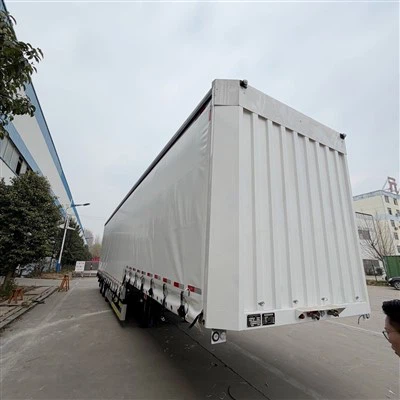
Let’s start with the basics. A stake trailer, sometimes called a stake bed trailer or stake rack trailer, is a type of flatbed trailer designed with vertical, removable metal posts (called stakes or stake pockets) lining its entire perimeter. Unlike a standard flatbed, which is just a flat, open deck with no sides or barriers, those stakes are the game-changer. They slot into reinforced pockets along the trailer’s side rails, and you can adjust their height, spacing, and even remove them entirely depending on what you’re hauling. That flexibility is why stake trailers are so versatile—they bridge the gap between the open ease of a flatbed and the enclosed security of a dry van or box trailer.
Wait, you might be thinking: if it’s just a flatbed with posts, why not just use a flatbed with tarps and straps? That’s a fair question, and it’s one I hear all the time. The answer comes down to efficiency, safety, and compliance. Let’s say you’re hauling a load of lumber, for example. If you stack 16-foot long 2x4s on a standard flatbed, you’ll need to run heavy straps across the top, but without sides, those straps can dig into the wood, causing damage, and the load might shift if you hit a pothole or make a sudden turn. With a stake trailer, you slide the stakes into the pockets at the edge of the deck, lift them to a height that matches the top of your lumber, and then run crossbars or additional straps between the stakes to hold the load in place. The stakes create a continuous barrier that prevents shifting, and you don’t have to over-tighten straps to keep the load from moving—this cuts down on loading time, reduces the risk of cargo damage, and makes your hauls safer for everyone on the road.
The stakes themselves are usually made of high-tensile steel, so they’re durable enough to support heavy loads, and many come with pin locks or spring-loaded mechanisms to keep them secured while you’re driving. The pockets they slot into are reinforced with steel plating, so they don’t wear out even after thousands of loads being loaded and unloaded. Most stake trailers have a deck length that ranges from 28 feet to 53 feet, which is standard for over-the-road hauling in North America, and they can be single-axle, tandem-axle, or tri-axle depending on your weight capacity needs. The average weight capacity for a standard 53-foot tandem-axle stake trailer is around 48,000 pounds, which is the legal maximum for most states, though we also offer heavy-duty models that can handle up to 70,000 pounds for specialized jobs.
Now, let’s talk about what makes a stake trailer different from other popular trailer types, because that’s where a lot of people get confused. First, compare it to a dry van, which is an enclosed box trailer. Dry vans are great for protecting cargo from weather and theft, but they’re not ideal for oversized or bulky items—you can’t fit a sheet of plywood that’s 12 feet long into a dry van without struggling, and you can’t haul pipes or construction beams at all without removing the trailer walls, which defeats the purpose of an enclosed unit. Stake trailers are open, so you can load and unload oversized cargo easily, but you can add tarps, side curtains, or netting to protect against rain, dust, or theft if you need to. That hybrid flexibility is unbeatable.
Then there’s the standard flatbed, which I mentioned earlier. Flatbeds are simpler, no stakes, no pockets, just a bare deck. They’re cheaper upfront, but they’re less versatile. If you try to haul anything that’s not uniform on a flatbed, you have to build temporary side barriers out of lumber or other materials, which adds time to loading and can leave your load vulnerable. Stake trailers eliminate that extra work. And unlike a lowboy trailer, which is designed for extremely heavy, tall, or oversized cargo that can’t fit under standard highway overpasses, stake trailers are built for general bulk hauling—they’re lower to the ground than lowboys, so loading is easier, and they work for almost every regular hauling job, from construction materials to agricultural goods to retail inventory.
Now, let’s get into the real-world uses, because that’s where stake trailers earn their keep. I’ve supplied stake trailers to customers in nearly every major industry, and the list of jobs they’re used for is almost endless. For construction companies, they’re a staple for hauling lumber, steel beams, roofing materials, pipes, and concrete blocks. The stakes keep loose blocks from rolling off during transport, and you can adjust the height of the stakes to fit long beams without overhanging the deck too much. For agricultural businesses, stake trailers are perfect for hauling hay bales, grain bins, livestock feed, fencing materials, and even small farm equipment. A lot of our agricultural customers love that they can remove the lower stakes to fit round hay bales without straining to build barriers, and add taller stakes to secure stacked feed bags.
Logistics and general freight companies also rely heavily on stake trailers. They’re often used for hauling oversized retail items like patio furniture, appliance bundles, or construction supplies for big box stores. They’re also common for moving event equipment—think stages, tents, and seating for concerts or sports games, which are often bulky and need to be secured without being crammed into a tight dry van. One of my longest-standing customers is a regional moving company that uses 10 stake trailers for long-distance moves, because they can load large furniture, appliances, and even small appliances onto the open deck, and use the stakes to keep everything from shifting during the drive.
Another key benefit of stake trailers is their adjustability for odd-shaped loads. If you have a load that’s wider than the trailer deck—say, a piece of heavy machinery that’s 10 feet wide, compared to a standard 8.5-foot trailer—you can extend the stakes and use them as additional side supports, or even add temporary extensions to the stakes to create a custom barrier. That level of customization is something you just don’t get with enclosed trailers or standard flatbeds.
Of course, no piece of equipment is perfect, and stake trailers have some limitations that are important to consider. For one, they’re not ideal for perishable cargo that needs climate control, because they’re open to the elements. If you’re hauling produce that can get damaged by rain or extreme heat, a dry van or refrigerated trailer is a better choice. They’re also more vulnerable to theft if you don’t have the right security measures, like heavy-duty tarps, lockable side curtains, or GPS trackers, because there’s no enclosed box to keep cargo safe. And while their flexibility is a strength, it can also be a drawback: if you only haul one type of load on a regular basis, a standard flatbed or dry van might be cheaper upfront, even if a stake trailer gives you more versatility.
That said, for most businesses that handle multiple types of loads, the cost of a stake trailer is easily offset by the time and labor saved on loading and securing cargo, plus the reduced risk of damage to goods. We hear from customers all the time who switched from standard flatbeds to stake trailers and saw their loading time cut by 30% within the first month, because they didn’t have to build temporary barriers for each load.
When we build our stake trailers, we focus on durability and usability, because we know our customers rely on these trailers to get their jobs done, day in and day out. We use high-grade steel for the stakes and pockets, so they don’t bend or warp even after hauling thousands of pounds of heavy cargo, and we add reinforced cross members under the deck to distribute weight evenly, which reduces wear on the trailer and improves safety on the road. We also offer customizable features, like LED lights along the side rails for better visibility at night, lockable stake pins to prevent theft, and different deck materials—aluminum for lighter weight and corrosion resistance, or steel for maximum durability.
If you’re in the market for a stake trailer, there are a few key things to consider before making a purchase. First, think about what types of loads you’ll be hauling most often. If you’re mostly moving construction materials like lumber and steel, you’ll want a model with taller stakes and a higher weight capacity. If you’re in agriculture and moving smaller, more varied loads, a lighter model with removable stakes might be a better fit. Second, check your local transportation regulations—there are strict rules in most states and countries about load size, weight, and overhang, so you’ll want to make sure your stake trailer is compatible with those rules to avoid fines. Third, think about maintenance. Stake trailers have moving parts—stakes, pins, pockets—that need regular upkeep to keep them in good shape. Look for a supplier that offers maintenance tips and replacement parts, so you can keep your trailer running for years.
At the end of the day, a stake trailer is more than just a trailer with posts—it’s a versatile, adaptable workhorse that solves a lot of the headaches that come with hauling heavy, oversized, or irregularly shaped cargo. I’ve been in this business long enough to see how much of a difference the right trailer can make for a fleet, and stake trailers are one of the most underrated tools in the trucking and logistics industry. If you’re tired of wasting time building temporary barriers for loads, dealing with cargo damage, or struggling to haul oversized items, a stake trailer might be exactly what your operation needs.

If you’re ready to learn more about the right stake trailer for your business, or you have questions about specifications, customization, or pricing, I’m here to help. Our team has years of experience working with customers across industries, and we can walk you through all the options to find a trailer that fits your needs and your budget. Reach out to our team to start a conversation about how a stake trailer can improve your hauling efficiency today.
Garbage Truck References
- Federal Motor Carrier Safety Administration. (2023). Heavy Vehicle Size and Weight Regulations. U.S. Department of Transportation.
- National Association of Trailer Manufacturers. (2022). Stake Bed Trailer Specification and Safety Guidelines.
- Construction Equipment Association. (2021). Hauling Best Practices for Construction Cargo.
- Agricultural Transportation Association. (2023). Modern Trailer Solutions for Farm Bulk Hauling.
Shandong Huajiang Automobile Trading Co., Ltd.
As one of the most professional stake trailer manufacturers and suppliers in China, we also support customized service. Please feel free to buy high quality stake trailer for sale here from our factory. For price consultation, contact us.
Address: Industrial Park, Quanpu Town, Liangshan County, Jining City, Shandong Province
E-mail: 18253772888@163.com
WebSite: https://www.hjtrailer.com/
