As a seasoned supplier in the stone crushing machine industry, I’ve encountered numerous inquiries regarding the capacity ranges of these machines. Today, I’m excited to share in – depth insights into this captivating topic. Stone Crushing Machine

Stone crushing machines play an indispensable role in various industries, such as mining, construction, and infrastructure development. Their ability to transform large rocks into smaller, more manageable sizes is crucial for many operations. The capacity of a stone crushing machine is a key factor that determines its suitability for different projects.
Understanding Capacity in Stone Crushing Machines
The capacity of a stone crushing machine is typically measured in tons per hour (t/h). It refers to the amount of raw material the machine can process within a given hour. However, it is essential to note that this figure can vary significantly depending on several factors, including the type of machine, the hardness and size of the input material, and the desired output size.
Different Types of Stone Crushing Machines and Their Capacity Ranges
Jaw Crushers
Jaw crushers are one of the most commonly used types of stone crushing machines. They are well – known for their simple structure, high efficiency, and large feeding capacity. Generally, small – scale jaw crushers can have a capacity ranging from 1 to 20 t/h. These are often used in small quarries or for on – site construction projects where the demand for crushed stone is relatively low.
Medium – sized jaw crushers usually have a capacity between 20 and 100 t/h. They are suitable for medium – scale mining operations and construction projects. For large – scale industrial applications, such as large – scale mining and major infrastructure projects, large jaw crushers can offer a capacity of over 100 t/h, sometimes reaching up to 1000 t/h or even more.
The working principle of a jaw crusher involves two jaws – one fixed and one moving. The moving jaw exerts pressure on the stones, crushing them against the fixed jaw. The capacity of a jaw crusher is affected by factors such as the width of the feed opening, the angle of the jaws, and the speed of the moving jaw.
Cone Crushers
Cone crushers are widely used for secondary and tertiary crushing. They are known for their high crushing ratio and excellent particle shape of the output. Small cone crushers typically have a capacity of around 15 to 50 t/h. These are often used in small – to – medium – sized aggregate production plants, where they can refine the output of primary crushers like jaw crushers.
Medium – sized cone crushers can handle a capacity of 50 to 200 t/h. They are suitable for medium – scale mining and construction projects where a consistent supply of high – quality crushed stone is required. Large cone crushers are capable of processing over 200 t/h, with some of the most advanced models reaching capacities of up to 1000 t/h.
The operation of a cone crusher is based on the principle of a mantle rotating within a concave. As the mantle rotates, it crushes the stones between itself and the concave, producing a well – graded and uniformly sized output. The capacity of a cone crusher is influenced by factors such as the size of the mantle, the eccentricity of the rotation, and the discharge opening size.
Impact Crushers
Impact crushers are favored for their ability to produce a high – quality, cubic – shaped output. Small impact crushers usually have a capacity ranging from 5 to 50 t/h. They are suitable for small – scale road construction projects and recycling applications, where they can crush materials such as concrete and asphalt.
Medium – sized impact crushers can achieve a capacity of 50 to 300 t/h. These machines are often used in medium – scale aggregate production and mining operations. Large impact crushers can process over 300 t/h, making them ideal for large – scale mining projects and high – volume construction activities.
Impact crushers work by using the impact force to crush the stones. The material is fed into the crusher and is struck by hammers or blow bars rotating at high speed. The capacity of an impact crusher is affected by factors such as the size and design of the rotor, the number of hammers or blow bars, and the speed of rotation.
Factors Affecting the Capacity of Stone Crushing Machines
Hardness of the Input Material
The hardness of the stones being crushed is a significant factor. Harder materials, such as granite and basalt, require more energy to break down. As a result, the capacity of the crushing machine will be lower when processing these materials compared to softer stones like limestone or sandstone.
Size of the Input Material
The size of the input material also plays a role. If the stones are too large, the machine may need more time to crush them to the desired size, reducing the overall capacity. Therefore, it is often advisable to pre – screen the input material to remove oversized stones.
Desired Output Size
The smaller the desired output size, the more crushing stages are required, which in turn reduces the capacity of the machine. For example, if you need a very fine – grained crushed stone for special construction applications, the machine will need to work harder and will produce less material per hour compared to when producing a coarser product.
Selecting the Right Capacity for Your Project
When choosing a stone crushing machine, it is crucial to accurately assess the requirements of your project. Consider the expected production volume, the type and hardness of the raw material, and the desired output size. If your project has a high – volume demand, a machine with a larger capacity will be more suitable. However, if your project has limited space or a lower production requirement, a smaller – capacity machine may be a better choice.
As a professional stone crushing machine supplier, we have a wide range of products to meet different capacity needs. Our experienced team can provide you with comprehensive advice on machine selection based on your specific project requirements. We understand that a well – chosen crushing machine can significantly improve the efficiency and profitability of your operation.
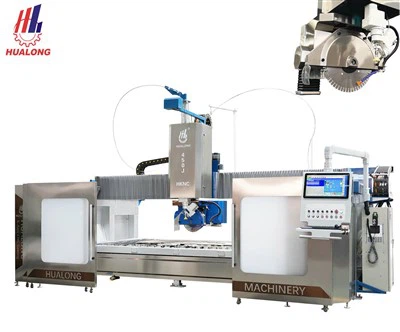
In conclusion, the capacity range of common stone crushing machines varies widely from a few tons per hour for small – scale applications to over a thousand tons per hour for large – scale industrial projects. By understanding the different types of machines, the factors affecting their capacity, and how to select the right one for your project, you can make an informed decision.
Double Blade Stone Quarry Machine If you are currently in the process of planning a stone crushing project and need assistance in choosing the right machine with the appropriate capacity, we are here to help. Our team of experts is ready to engage in a detailed discussion about your project requirements, offer personalized solutions, and provide you with all the necessary information to make a confident and profitable investment. Feel free to reach out to us for a procurement discussion.
References
- "Crushing and Screening Handbook", published by the Mineral Processing Society.
- Technical manuals of various stone crushing machines from leading manufacturers.
Fujian Province Hualong Machinery Co., Ltd.
Fujian Province Hualong Machinery Co., Ltd. is one of the most professional stone crushing machine manufacturers and suppliers in China, featured by quality products and good price. Please rest assured to buy high-grade stone crushing machine for sale here from our factory.
Address: Huangshi Industrial Zone, Putian City, Fujian Province, China
E-mail: jenkin@hualongm.com
WebSite: https://www.stonecuttingmachine.com/
