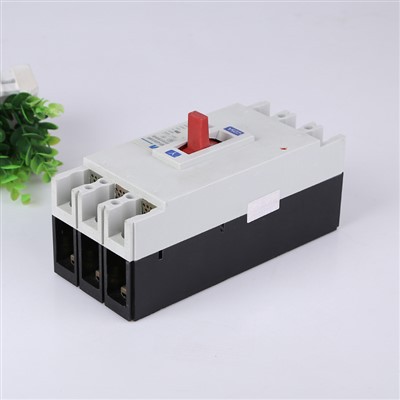
A residual current circuit breaker (RCCB), also known as a ground fault circuit interrupter (GFCI) in some regions, is a crucial safety device in an elevator electrical system. As a supplier of RCCBs, I’ve witnessed firsthand the importance of these devices in ensuring the safe operation of elevators. In this blog, I’ll delve into how an RCCB works in an elevator electrical system, highlighting its significance and the mechanisms behind its functionality. Residual Current Circuit Breaker
Understanding the Basics of an Elevator Electrical System
Before we explore how an RCCB functions, it’s essential to understand the basic components of an elevator electrical system. An elevator’s electrical system is a complex network that includes power supplies, control circuits, motors, and various safety devices. The power supply provides the necessary electrical energy to operate the elevator, while the control circuits manage the movement of the elevator car, including starting, stopping, and floor selection. The motors are responsible for driving the elevator car up and down the shaft.
Safety is of utmost importance in an elevator system, and various safety devices are installed to prevent accidents. These include limit switches, overspeed governors, and emergency brakes. The RCCB is another critical safety device that plays a vital role in protecting passengers and equipment from electrical faults.
How a Residual Current Circuit Breaker Works
The primary function of an RCCB is to detect and interrupt any leakage current in an electrical circuit. Leakage current occurs when electrical current flows through an unintended path, such as through a person’s body or to the ground. This can happen due to damaged insulation, faulty wiring, or other electrical faults.
An RCCB works by continuously monitoring the current flowing in the live and neutral conductors of an electrical circuit. In a normal, healthy circuit, the current flowing in the live conductor should be equal to the current flowing in the neutral conductor. This is because the electrical current forms a closed loop, and the same amount of current that enters the circuit must return.
However, when there is a leakage current, the current in the live conductor will be greater than the current in the neutral conductor. The RCCB detects this imbalance in current and quickly interrupts the circuit to prevent any potential harm.
The RCCB consists of a current transformer, a sensing circuit, and a tripping mechanism. The current transformer is used to measure the current flowing in the live and neutral conductors. It consists of a primary winding, which is connected in series with the live and neutral conductors, and a secondary winding. The secondary winding produces a voltage proportional to the current flowing in the primary winding.
The sensing circuit compares the current in the live and neutral conductors. If there is an imbalance in current, the sensing circuit detects this and sends a signal to the tripping mechanism. The tripping mechanism then opens the circuit, interrupting the flow of electrical current.
The Importance of RCCBs in Elevator Electrical Systems
In an elevator electrical system, RCCBs play a crucial role in ensuring the safety of passengers and equipment. Elevators are complex machines that rely on electrical power to operate, and any electrical fault can pose a significant risk.
One of the main risks in an elevator electrical system is electrical shock. If a person comes into contact with a live electrical conductor, they can receive a dangerous electric shock. An RCCB can detect any leakage current and quickly interrupt the circuit, preventing the person from being exposed to the electrical current.
Another risk in an elevator electrical system is fire. Electrical faults can cause overheating and arcing, which can lead to a fire. An RCCB can detect any abnormal current flow and interrupt the circuit before a fire can start.
In addition to protecting passengers and equipment from electrical shock and fire, RCCBs also help to prevent damage to the elevator’s electrical components. Electrical faults can cause damage to motors, control circuits, and other components, which can lead to costly repairs and downtime. By detecting and interrupting any leakage current, an RCCB can help to prevent damage to these components and ensure the reliable operation of the elevator.
Installation and Maintenance of RCCBs in Elevator Electrical Systems
Proper installation and maintenance of RCCBs are essential to ensure their effective operation. When installing an RCCB in an elevator electrical system, it’s important to follow the manufacturer’s instructions and local electrical codes. The RCCB should be installed in a location where it can easily detect any leakage current and where it is protected from damage.
Regular maintenance of RCCBs is also important to ensure their continued reliability. This includes testing the RCCB periodically to ensure that it is functioning properly. Most RCCBs have a test button that can be used to test the device. When the test button is pressed, the RCCB should trip and interrupt the circuit. If the RCCB does not trip, it may be faulty and should be replaced.
In addition to testing the RCCB, it’s also important to inspect the electrical system for any signs of damage or wear. This includes checking the wiring, insulation, and connections for any signs of damage or corrosion. Any damaged or worn components should be replaced immediately to prevent electrical faults.
Conclusion

In conclusion, a residual current circuit breaker is a crucial safety device in an elevator electrical system. It works by detecting and interrupting any leakage current in the electrical circuit, protecting passengers and equipment from electrical shock and fire. As a supplier of RCCBs, I understand the importance of these devices in ensuring the safe operation of elevators.
Miniature Circuit Breaker If you’re in the market for high-quality RCCBs for your elevator electrical system, I encourage you to reach out to us. Our team of experts can help you select the right RCCB for your specific needs and provide you with the support and guidance you need to ensure its proper installation and maintenance. Contact us today to discuss your requirements and start the procurement process.
References
- Electrical Safety Foundation International. (n.d.). Ground Fault Circuit Interrupters (GFCIs). Retrieved from [Website Name]
- International Electrotechnical Commission. (2017). IEC 61008-1: Residual current operated circuit-breakers without integral overcurrent protection for household and similar uses – Part 1: General rules.
- National Fire Protection Association. (2017). NFPA 70: National Electrical Code.
Zhejiang Westroom Electric Co., Ltd.
As one of the leading residual current circuit breaker manufacturers and suppliers in China, we have world-leading production equipment and strong manufacturing capabilities. Please feel free to wholesale advanced residual current circuit breaker at competitive price from our factory.
Address: No. 22, Enze Road, Xiangbei Village, Liushi Town, Yueqing City, Wenzhou City, Zhejiang Province
E-mail: Zjxfdq15105772211@126.com
WebSite: https://www.westroomdianqi.com/
